Career Readiness Is More Than Just Career Exploration
A few weeks ago I went down a rabbit hole.
One of the things I love about summer is having time to read things that make me rethink my classroom. This time, it was the 2025 New Hire Readiness Report from the U.S. Chamber of Commerce and College Board. The report surveyed 500 hiring managers from companies across the country about how prepared they feel today's entry-level employees are for the workforce.
According to the report, 84% of surveyed hiring managers agreed that most high school students are not prepared to enter the workforce.
Ouch.
Let's be clear.
I'm not interested in blaming today's students. Or today's teachers. Or today's parents.
Because I’m not sure what the root of the problem is.
Maybe workplaces have changed. Maybe expectations have shifted. Maybe we're still seeing the ripple effects of COVID and years of interrupted social interaction. Maybe it's simply that work is changing faster than ever, with new technology, AI, and a workforce that's shifting from one generation to the next.
I don't know.
But the fact remains that hiring managers feel new employees need more preparation before entering the workforce.
So instead of asking, "What's wrong with today's students?" I found myself asking, “What do employers actually want students to know?”
Employers Aren't Just Looking for Academic Skills
The report found that employers aren't simply looking for good grades or academic knowledge.
They're looking for people who can communicate, solve problems, think critically, and adapt to new situations.
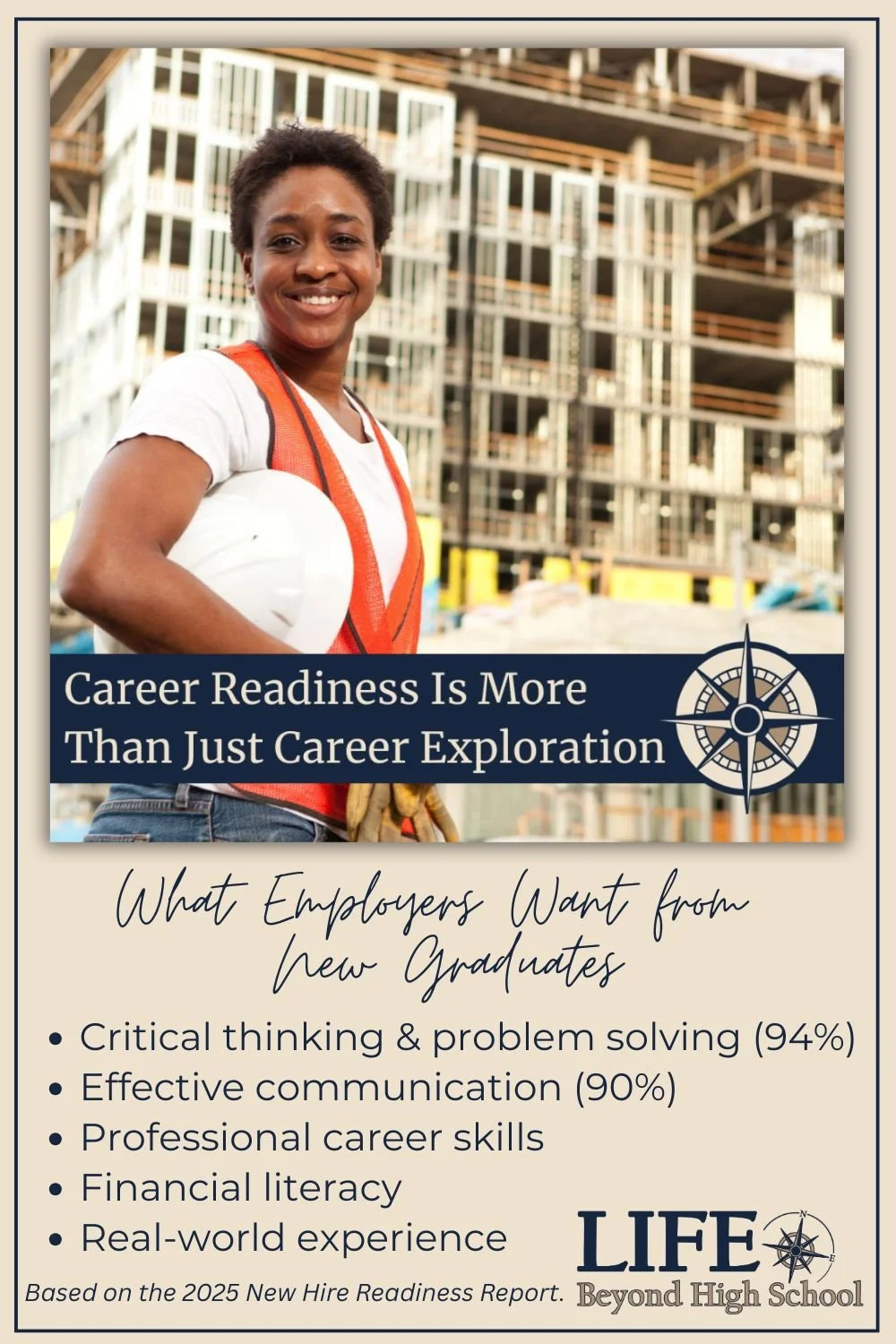
In fact, 94% of surveyed hiring managers said they're more likely to hire entry-level employees who demonstrate critical thinking and problem-solving skills, and 90% said the same about effective communication.
Nearly all of the hiring managers surveyed also said schools should teach more professional career skills like communication, collaboration, and critical thinking.
One quote from the report really stuck with me. One hiring manager said:
"I actually hate the term soft skills. I feel like they're critical skills."
I couldn't agree more.
This Matches What I See in My Classroom
One thing I love about teaching career readiness is that students are genuinely interested.
They'll ask things like, "Wait... what is direct deposit?" or "What should I wear to my interview?"
They want to know how to get a job, what employers expect, why taxes come out of their paycheck, how to read a pay stub, and what they're supposed to do on the first day of work.
I’ll be honest, I don’t typically get this level of engagement when I’m teaching quadratic formula or the cell cycle 😂. Students are seriously interested in talking about adulthood.
Maybe We've Been Thinking About Career Readiness Too Narrowly
Sometimes it feels like schools treat career readiness as an extra. Something you do if you have time. That belongs to the career center or the school counselor or that parents are supposed to teach at home. Or maybe a box that gets checked by taking a career interest inventory once a year.
Please don't misunderstand me.
I think career exploration is incredibly important.
Students absolutely should spend time thinking about careers that fit their interests, strengths, and goals.
But career readiness can't stop there.
Knowing you want to become a veterinary technician doesn't teach you how to search for vet hospital job openings.
Knowing you want to become an electrician doesn't teach you how to complete an IBEW apprenticeship application.
Knowing you want to become a teacher doesn't help you understand new-hire paperwork or opting into a 403(b).
Career exploration is just the beginning.
One Lesson I Learned from Special Education
Early in my teaching career, I taught many of these skills in special education.
Through study skills classes and transition planning, we talked about education, employment, independent living, self-advocacy, and preparing students for life after graduation.
But over the years, as my career has evolved, I discovered that these aren't special education skills.
They're adult skills. Everyone eventually has to navigate adulthood.
That's why I now teach these topics with general education students, special education students, advisory classes, adult education learners… basically anyone who’ll listen 😉.
Eventually, every student will fill out paperwork, communicate professionally, manage money, understand a paycheck, and navigate a workplace.
Career Readiness Is a Progression
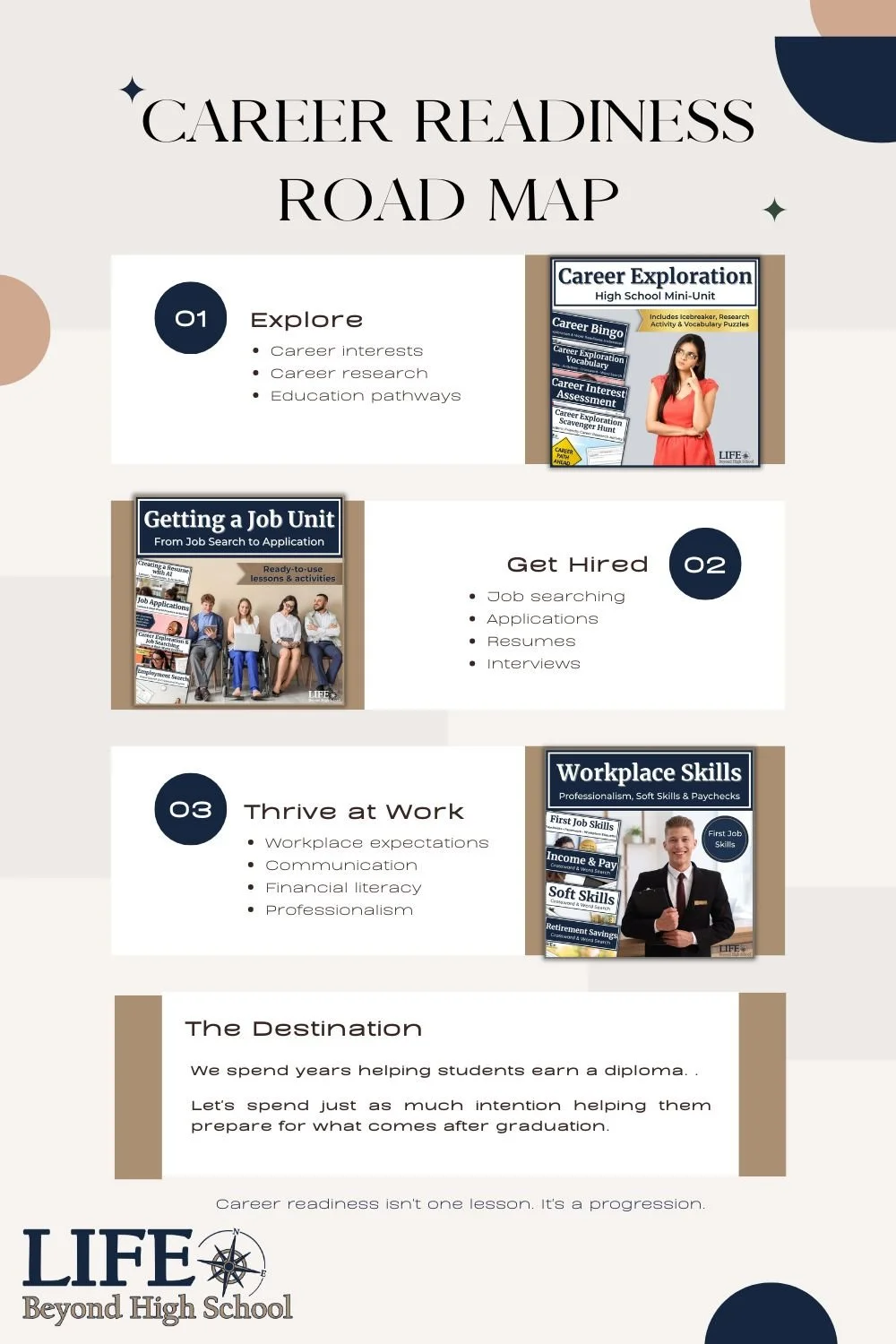
While I was reorganizing my Teachers Pay Teachers store this summer, I realized that over the years, I inadvertently built what amounts to a career readiness roadmap.
I didn't plan it that way. I just created lessons that answered the next question my students were asking. I shuffled these around and found a nice little progression:
It starts with:
What careers might fit my interests, strengths, and goals?
Then moves to:
How do I actually search for jobs, complete an application, prepare for an interview, and build a resume?
And finally:
Now that I have the job, what do I need to know to keep it?
Looking through my lessons, I reflected on what employers were describing in the report.
Career readiness isn't one lesson. It isn't one worksheet or one career interest inventory. It's an ongoing conversation that helps students build both career awareness and the practical adulting skills they'll use long after graduation.
Another finding from the report reinforced that idea.
Nearly 9 out of 10 hiring managers (89%) said experience is more valuable than formal education, and internships were the most commonly cited way students develop early career skills.
To me, that doesn't diminish the importance of school.
It reminds us that students need opportunities to practice these skills before they're sitting across from someone in a real interview.
Career Readiness Includes Financial Literacy
One finding made me smile because it connected two things I'm constantly talking about: career readiness and financial literacy.
The report found that 96% of hiring managers believe financial literacy is valuable for employees who are just starting their careers. The topics they valued most included understanding taxes, net income, budgeting, saving, investing, borrowing, and credit.
That's a good reminder that career readiness doesn't end when students accept a job offer.
Their first paycheck raises a whole new set of questions. Not to mention tax time!
It Doesn't Have to Be a Separate Class
One misconception I hear fairly often is that career readiness requires a semester-long elective.
I'd argue that career readiness can fit almost anywhere.
Sometimes it's a five-minute discussion. A bell ringer. A brain break. Connecting the content you're already teaching to life after high school.
Teaching revision? Have students revise a resume.
Teaching percentages? Calculate payroll tax deductions.
Teaching professional writing? Draft a cover letter.
Teaching persuasive writing? Write a script to negotiate car insurance rates.
All of those little moments add up.
Career readiness doesn't always require adding something new. Sometimes it's about recognizing opportunities that already exist in the curriculum.
Final Thoughts
When I first opened the report, the statistic that grabbed my attention was the one saying that 84% of hiring managers don't believe most high school students are ready for the workforce.
But after reading the report, that statistic isn't what has stayed with me.
What has stayed with me is that employers were remarkably consistent about the skills they value: communication, critical thinking, professionalism, financial literacy, and real-world experience. Those aren't "extras." They're the skills students will use no matter what path they choose after high school.
To me, that's what career readiness is really about.
Yes, students should explore careers that match their interests and strengths. But they also deserve opportunities to build the confidence and practical skills they'll need to navigate interviews, paychecks, workplace expectations, and the countless decisions that come with adult life.
We spend years helping students earn a diploma.
Let's be as intentional about helping them prepare for what comes after graduation.
Because when students leave our classrooms, they're not just stepping into the next grade level.
They're stepping into adulthood.
And I think that's a future worth preparing them for.