
Postsecondary Application Process - Lesson & Activities
Helping students figure out their plans after high school is only half the battle. The next part is walking them through the application process without anyone getting overwhelmed by deadlines, transcripts, portals, and essay prompts.
This postsecondary application lesson breaks the process down step by step so students know what to do next, and you have a clear framework you do not have to build from scratch.
Why this works
Students see the full process instead of guessing or avoiding it
The steps feel manageable instead of intimidating
You can teach applications with confidence, even if this is not your favorite topic
This lesson is designed to make a complicated process feel doable for everyone in the room.
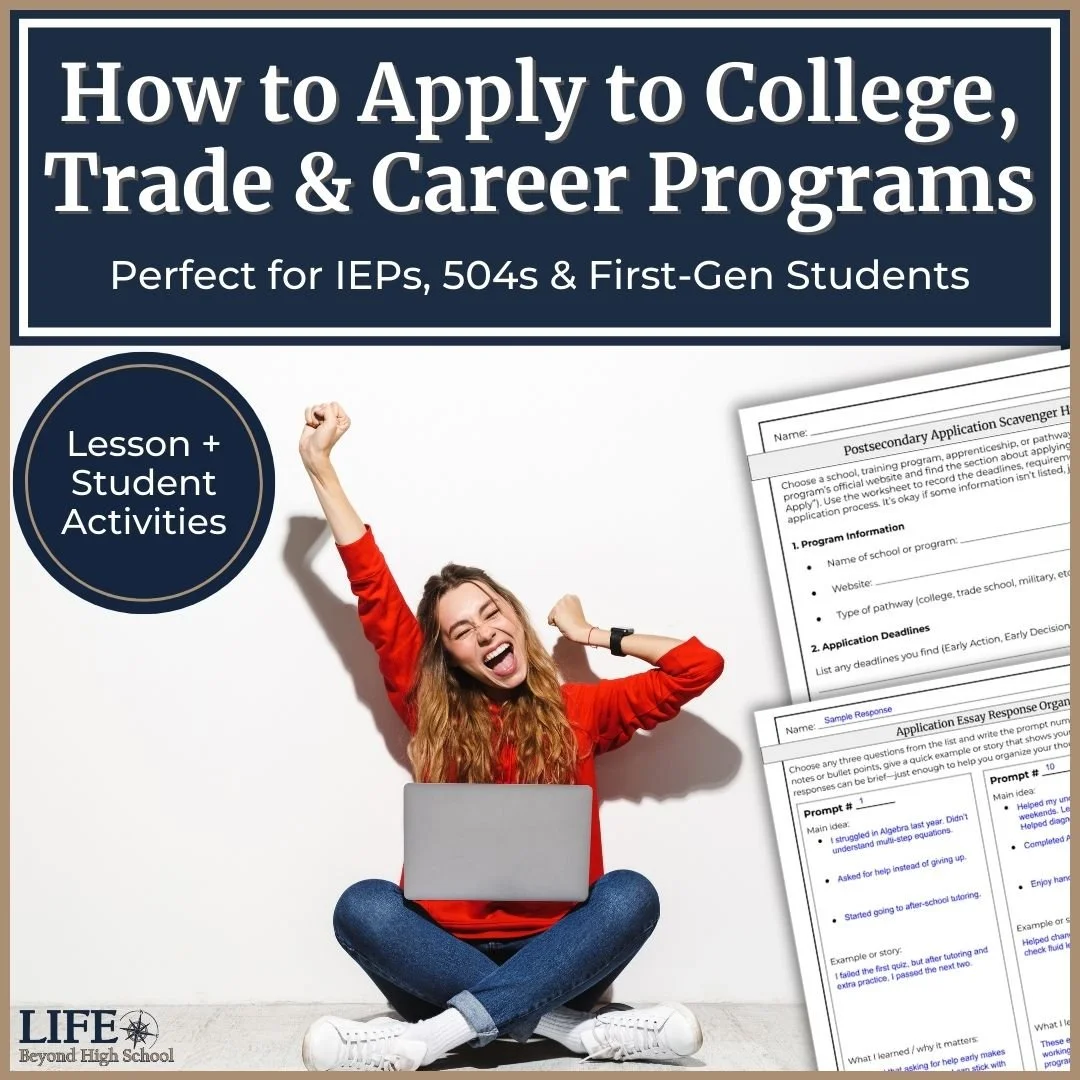
Why This Lesson Exists (and Why You Might Need It)
I built this lesson after watching my otherwise capable and driven students stall out when the application process felt unclear and high-stakes. When students can see the full process and practice each step in a low-pressure way, they are far more likely to follow through.
It helps students:
Understand what to do, when to do it, and why it matters
Break tasks into manageable steps
Practice real application writing and tasks
Build confidence and follow-through instead of avoidance
It helps you:
Reduce overwhelm for students and for yourself
Teach applications without reinventing the wheel every year
Support students with executive functioning challenges
Serve students with a wide range of abilities, needs, and postsecondary goals in one lesson
Why this matters:
This lesson builds familiarity with the process for accessing education and training after high school so students can keep moving forward.

What’s Included in the Lesson
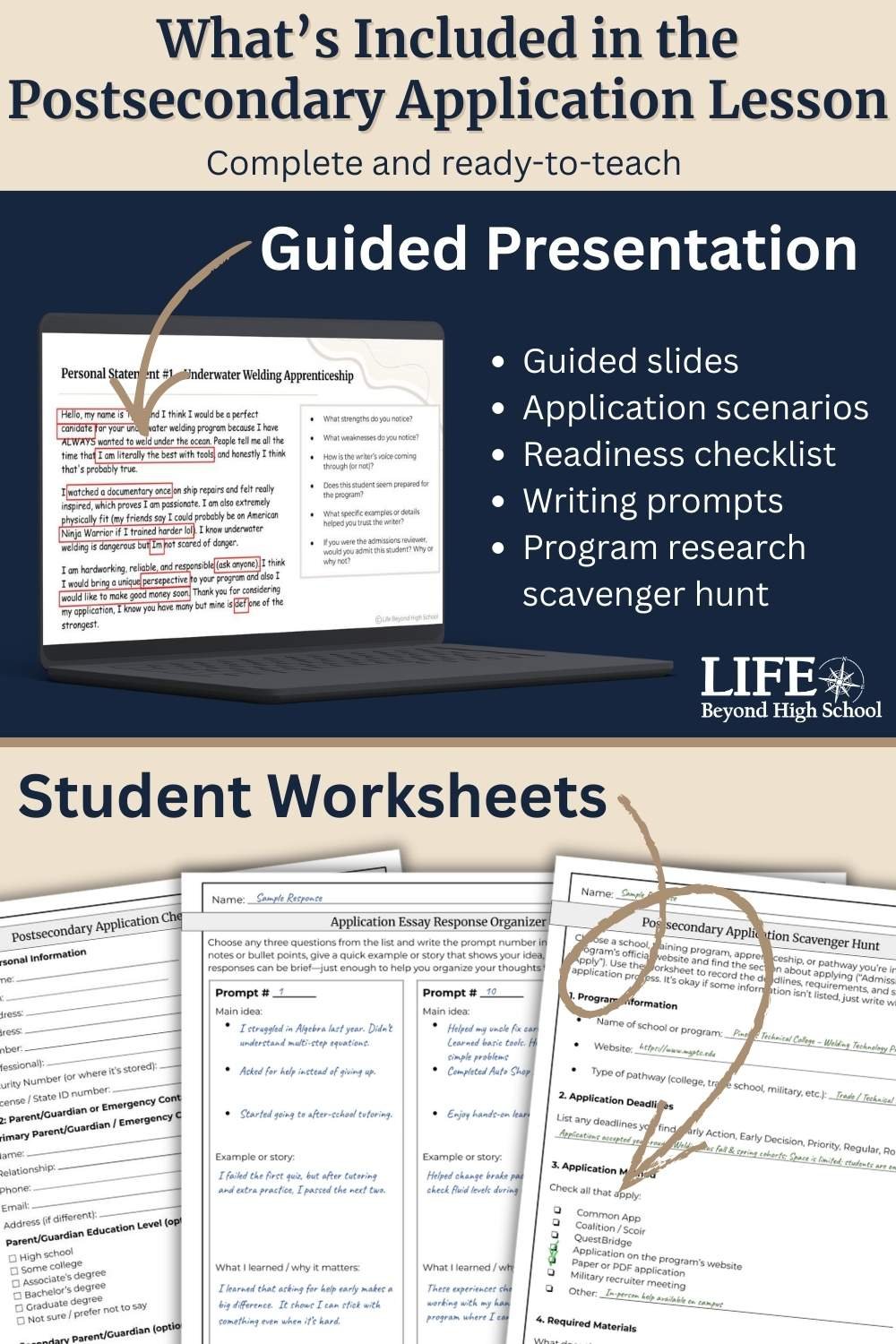
This lesson includes a fully guided, ready-to-teach presentation and student-friendly activities that mirror real application tasks.
Guided Presentation (Google Slides or PowerPoint)
Students learn the basics of how to apply to four-year colleges and universities, community colleges, trade and vocational programs, apprenticeships, and military pathways.
The lesson also covers:
Entrance exams versus placement tests, with sample questions
Personal statements and short-answer essays
Transcript requests
Letters of recommendation
Realistic application scenarios
Each slide includes teacher-friendly speaker notes with discussion prompts, helpful context, or optional resource links.
Student Worksheets and Activities
✔ Application Readiness Checklist
✔ 26 application-style short-answer practice prompts across pathways
✔ Letter of Recommendation Brainstorm Worksheet
✔ Application Scavenger Hunt using a real program
✔ Sample responses for modeling or easier grading
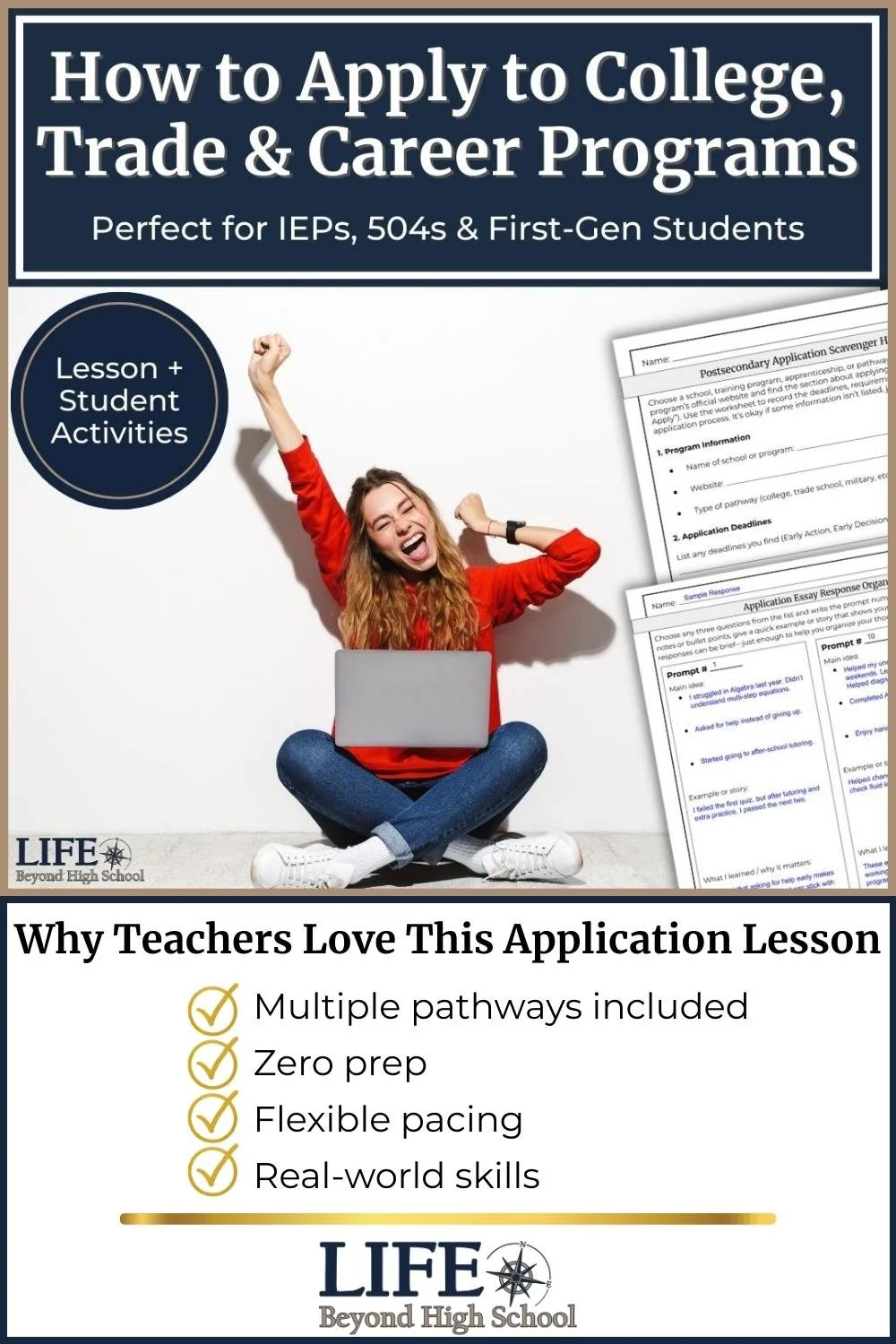
Why Teachers Love This Lesson (and How They Use It)
Teachers reach for this lesson because it is practical, flexible, and realistic for real classrooms.
Trades, apprenticeships, community college, and military pathways are all included.
Teach it all at once or break it into short sessions as time allows.
Students practice real skills they will use beyond high school.
Where This Lesson Fits
Use this postsecondary application lesson in a variety of settings, depending on your students and your schedule:
College and Career Readiness units
Advisory, AVID, or homeroom
Special education transition planning
Counseling or academic advising workshops
Life skills or study skills classes
Common Teacher Concerns (Answered)
“My students are not all college-bound.”
No problem. This lesson includes multiple pathways.
“My students get overwhelmed easily.”
The built-in checklists, organizers, and scenarios break the process into manageable steps.
“I do not have much class time.”
The lesson is modular and can be taught in smaller chunks as your schedule allows.
Ready to Make the Application Process Less Stressful?
If you’re looking for a calm, structured way to teach applications, this is a solid fit.
👉 Check out the preview to see exactly what’s included
👉 View the resource on TPT when you’re ready
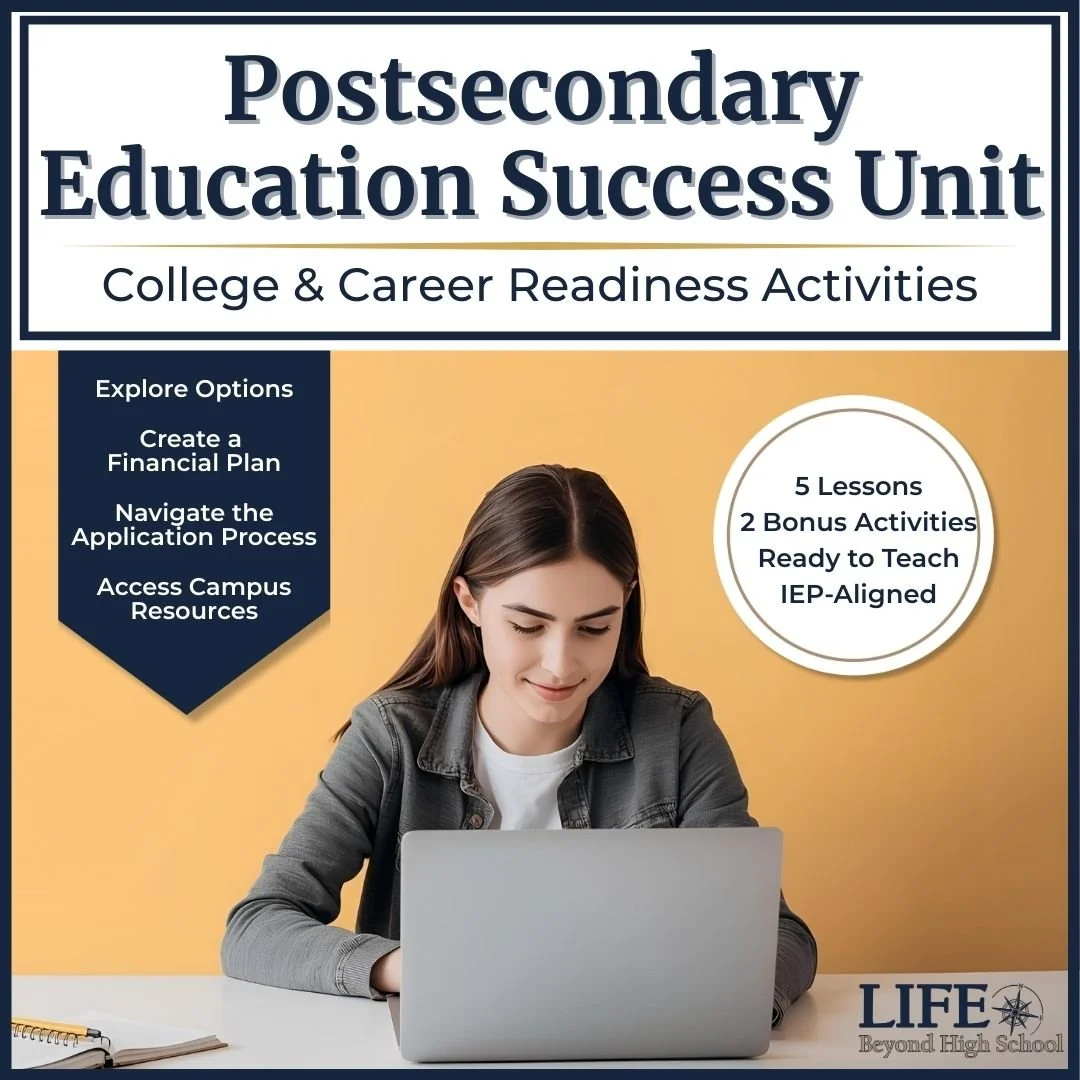
👉 Or explore the larger postsecondary bundle if you want everything in one place
Less overwhelm for students. Fewer “I don’t know where to start” moments. And one fewer thing for you to build from scratch!


