How to Teach Soft Skills for Employability in Any Classroom
A student earns good grades, turns in assignments on time, and understands the content. But they struggle in group work, communicate unclearly, and can’t take feedback without shutting down.
On paper, this student looks “college and career ready.” In real workplaces, these gaps can be deal-breakers.
If that sounds familiar, you’re not alone. Employers consistently rank communication, teamwork, and problem-solving among the most important workplace skills, often above technical expertise (World Economic Forum).
Many educators want to teach soft skills, especially the kinds employers care about most, but aren’t sure where they fit in an already packed school day. Soft skills for employability clearly matter outside of school, yet inside school, they’re often left to chance or treated as implicit expectations.
That disconnect is what I’ve come to think of as the soft skills paradox.
The Soft Skills Paradox
Outside of school, workplace soft skills are everywhere.
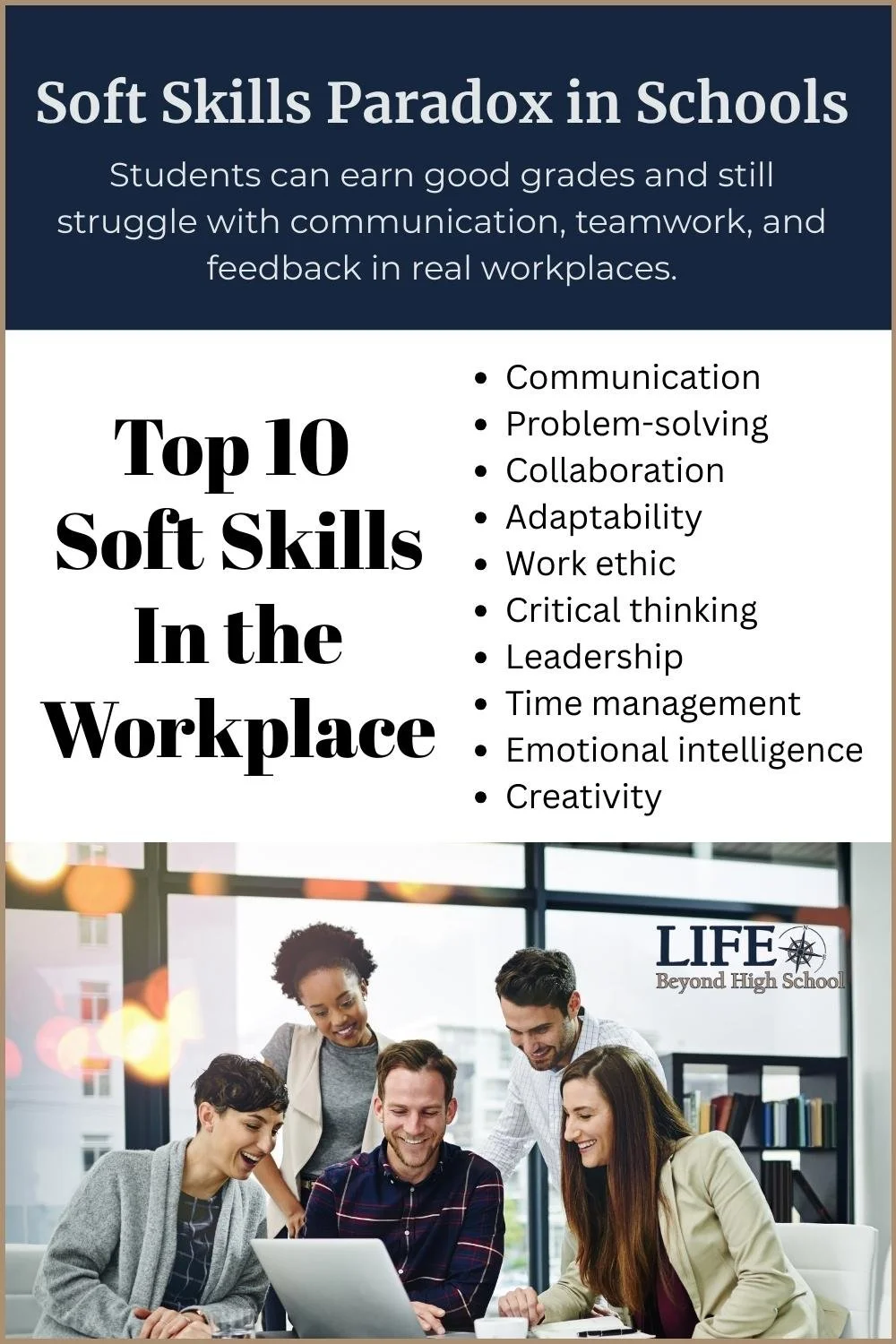
They show up in job postings, interviews, performance reviews, and everyday interactions at work. Employers consistently emphasize skills like communication, teamwork, adaptability, professionalism, and problem-solving.
Inside school, these skills are valued, but rarely taught explicitly.
Unless a school has dedicated SEL or character education time, soft skills instruction often falls by the wayside. Coaches, counselors, or advisors may address soft skills, but not every student participates in sports, clubs, or counseling. And most content-area teachers are focused (rightfully so) on academic standards, pacing, assessments, and testing.
No shade intended. An algebra or U.S. government teacher already has their own content to cover.
The result is a familiar and frustrating paradox:
Employers and workplaces value soft skills for employability.
Schools are not structured to teach them consistently or explicitly.
What Employers Are Actually Asking For
When employers talk about “career readiness skills,” they are often talking about soft skills.
The Future of Jobs Reports from the World Economic Forum consistently highlight communication, adaptability, collaboration, and problem-solving as essential skills for the modern workforce.
Similarly, the National Association of Colleges and Employers (NACE) identifies communication, professionalism, teamwork, and critical thinking as core career readiness competencies.
Technical skills matter, but they’re not enough on their own. I’ve seen this play out repeatedly, both as an employer and as an educator.
As someone who has interviewed paraeducators, teachers, and school staff, I’ve met applicants who arrived late to interviews, struggled to read the room, or spent 45 minutes answering the first interview question. The issue wasn’t knowledge or qualifications. It was communication, self-awareness, and the ability to pick up on social cues.
As a mentor teacher, I’ve worked with student teachers or new teachers who found it difficult to accept even gently-worded, positively-framed feedback. And as a classroom teacher, I’ve watched students struggle in the workforce because they had difficulty making small talk, limited experience meeting new people, or unrealistic perceptions of their own strengths and limitations.
The good news is that these are teachable skills.
Teens, Young Adults, and the COVID Effect
It’s also important to acknowledge the context students are coming from.
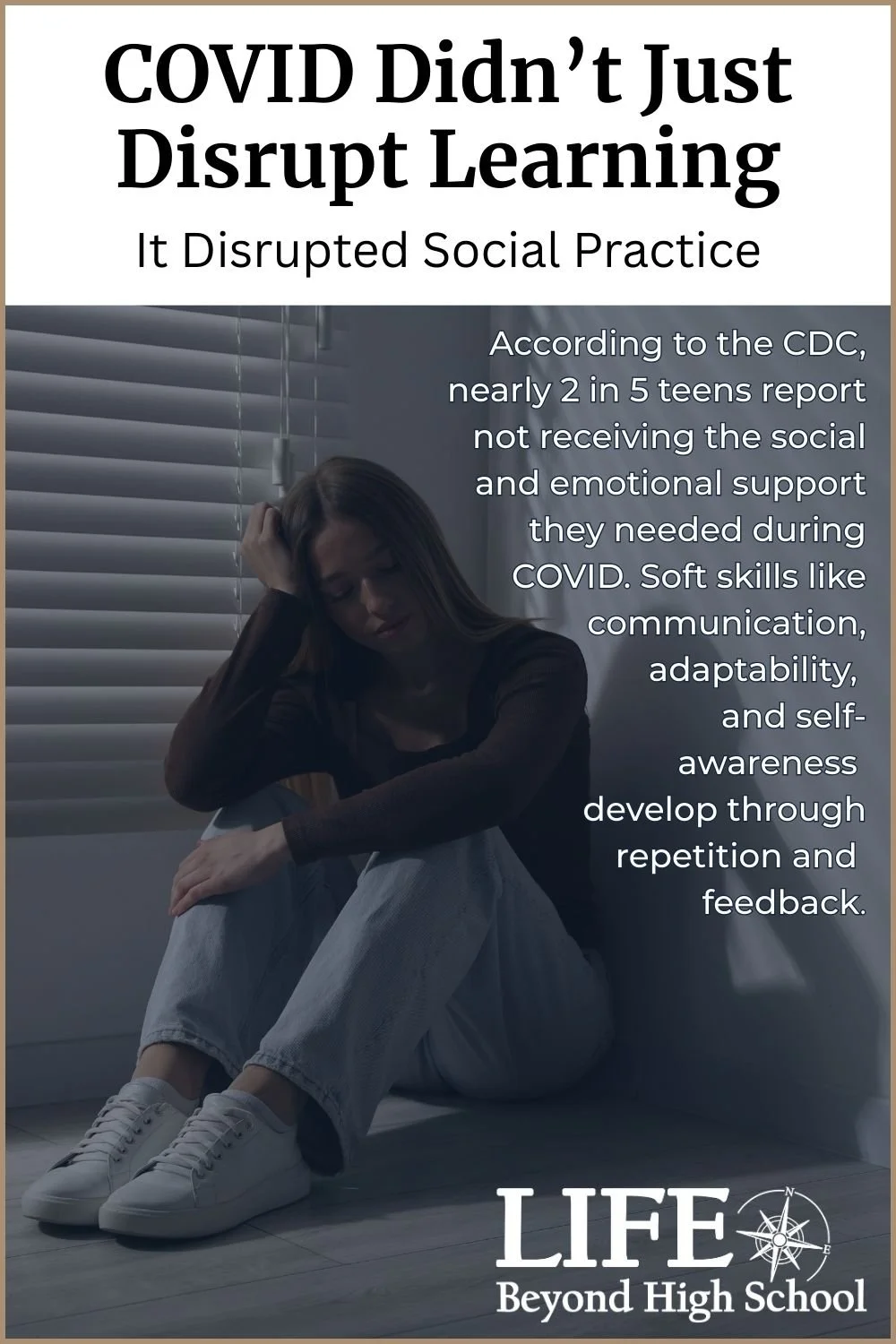
Many teens and young adults lost years of in-person social practice during COVID. Research from the American Psychological Association highlights how prolonged isolation disrupted normal social development for adolescents. Public health data from the CDC also points to lasting social and emotional impacts following the pandemic.
This isn’t a character flaw. It’s a missed practice opportunity.
Soft skills develop through repetition, feedback, and real-world interaction. When those opportunities disappear, skill development slows.
The Good News: Soft Skills Are Teachable
Soft skills are not fixed traits.
While some students may naturally lean toward interpersonal or intrapersonal strengths, soft skills can be taught, practiced, and improved over time. Research summarized by CASEL shows that social and emotional skills respond well to explicit instruction, and the OECD emphasizes that these skills develop through experience and guided practice.
In my own life, I learned many an “unwritten rule” because someone explained it to me. I had a mentor, or a parent, or even a colleague who explained:
What to wear to an interview
How to participate in meetings without dominating the conversation
How to balance confidence with approachability
When we teach soft skills explicitly, we remove the guesswork. We name expectations, talk about norms, and acknowledge that workplaces don’t all operate the same way.
That clarity benefits everyone, but it’s especially important for neurodivergent students and those with limited workplace exposure.
A Simple Framework to Teach Soft Skills in Any Class
If you want to teach soft skills without designing a full curriculum from scratch, a simple structure goes a long way:
Define the skill in clear, student-friendly language
Show it in context (video, scenario, role-play)
Let students practice in a low-stakes way
Reflect and connect the skill to real life
Practice matters more than memorization. A definition alone won’t change behavior.
For example, students can rewrite rude statements into more professional language, analyze workplace scenarios for missteps, or role-play conflict resolution. Many students don’t know what situations to anticipate in professional settings. So examples, media clips, and scenarios help them picture what these skills look like in action.
Classroom Activities That Make Skills Stick
The most effective soft skills instruction is focused, varied, and flexible.
One approach that works especially well is dedicating one mini-lesson to a single soft skill. This keeps instruction manageable while still allowing you to go deeper when time permits.
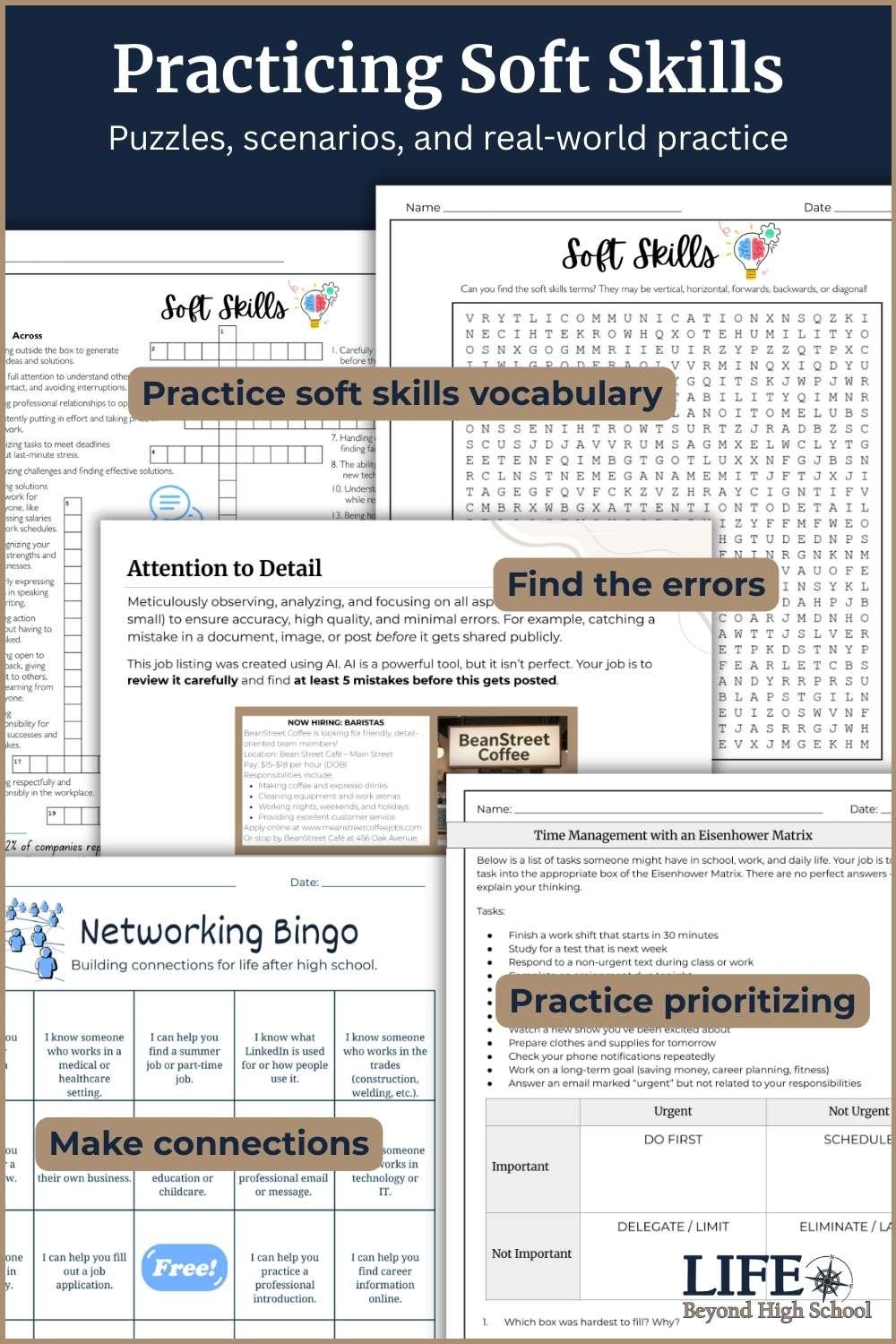
Below is a snapshot of the types of activities I curated to explore soft skills in meaningful, real-world ways. These examples are included to spark ideas for your own classroom and to illustrate the depth and variety built into the full lesson.
Communication practice where students rewrite abrupt or unprofessional statements into more appropriate workplace language
Active listening partner introductions, using an icebreaker and then introducing a partner to the group by summarizing their story
Conflict styles quiz to help students reflect on how they approach disagreement
Negotiation scenarios where students brainstorm compromises in common workplace situations
Networking bingo to help students identify people in their current circles who can support their growth and career goals
Emotional intelligence self-assessment
TED Talk on humility and its role in effective teamwork
Accountability activities that examine common workplace mistakes and what taking ownership really looks like
Eisenhower Matrix activity where students prioritize tasks into Do First, Schedule, Delegate, or Eliminate
Attention-to-detail practice by identifying errors in an AI-generated job ad
Video analysis of professionalism (and lack thereof) using a short clip from The Devil Wears Prada
Discussion of work ethic vs. work style across different generations in the workplace
Trust-building discussion that explores how trust is earned and broken at work
Video clip featuring business leaders discussing initiative and self-direction
Adaptability self-check
Resilience quiz for guided self-reflection
Exploration of workplace stress, its long-term effects, and the importance of stress management
Workplace ethics case studies
Video on why employers value creativity
Self-awareness assessment
What students often realize through these activities is that workplace situations are nuanced. Many challenges aren’t about right or wrong answers, but about judgment, awareness, and communication.
For Teachers Who Want to Save Time
If you’re thinking, “This sounds useful, but I don’t have time to build it,” I hear you.
There is a lot of content online. Some of it drifts into politics or controversy. Some quizzes require students to register or enter an email address. And much of it isn’t designed with real classrooms in mind.
What I bring to this work is the vetting and curation. I’ve already done the research, tested the activities, and gathered resources that are classroom-appropriate, practical, and easy to use.
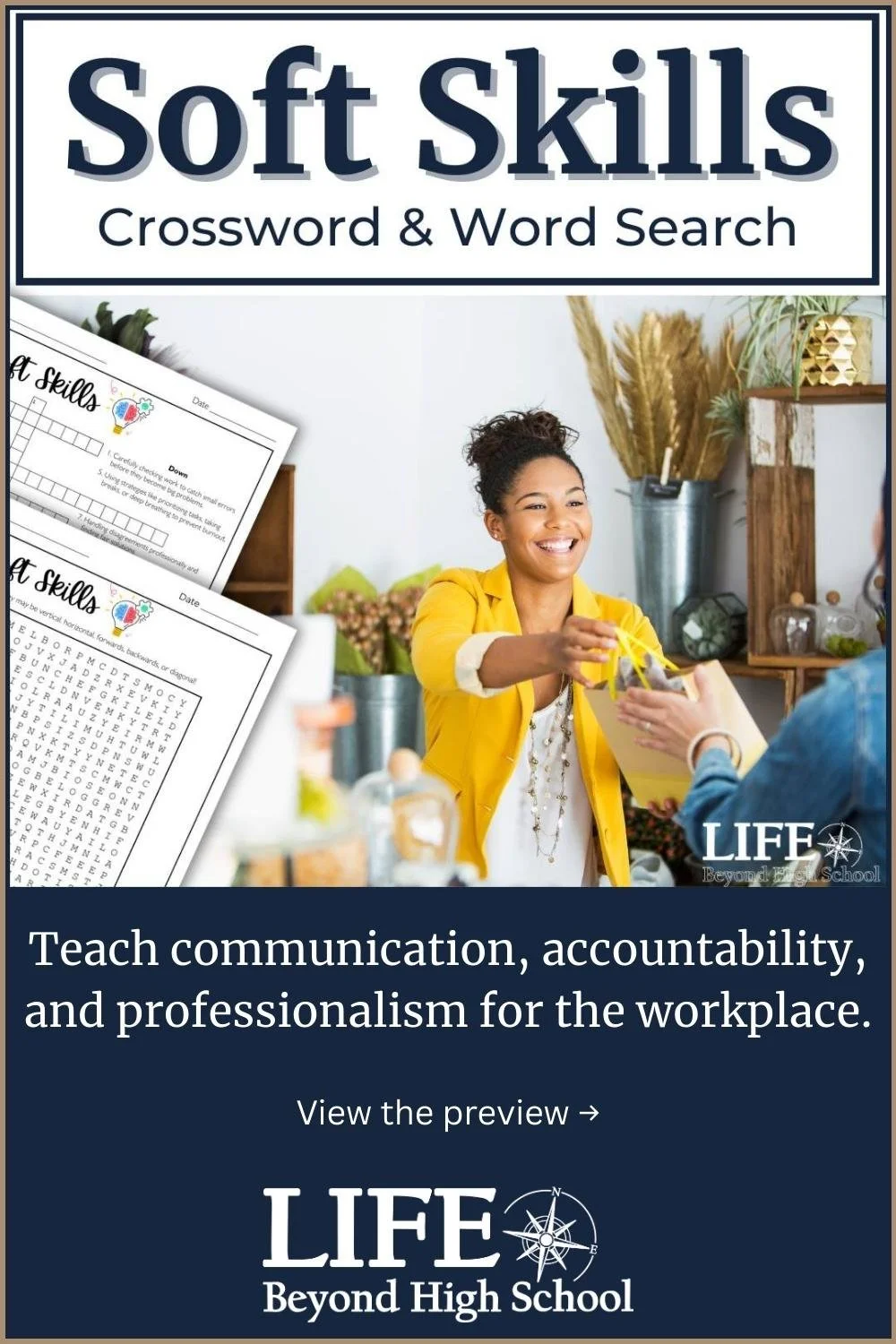
That’s why I eventually packaged this work into a ready-to-use lesson. I started with puzzles, but quickly realized how complex soft skills for employability really are. These skills overlap, and they require examples, discussion, and repeated practice.
This type of resource is especially helpful for:
Content-area teachers who want to teach soft skills without sacrificing their curriculum
Special education teachers and transition educators looking for practical, real-world tools
Substitutes who need flexible, plug-and-play lessons
If this sounds helpful and you don’t want to start from scratch, you can explore the Soft Skills lesson here. It’s designed to be low prep, flexible, and usable across different settings.
What’s Coming Next
I’m currently building a larger bundle of employment and career-readiness activities, and this soft skills lesson will be included.
If you’re also teaching job searching or career exploration, you might find this related post helpful: Employment Searching and Career Exploration for Students
When we teach soft skills explicitly, we help students turn academic success into real-world success.