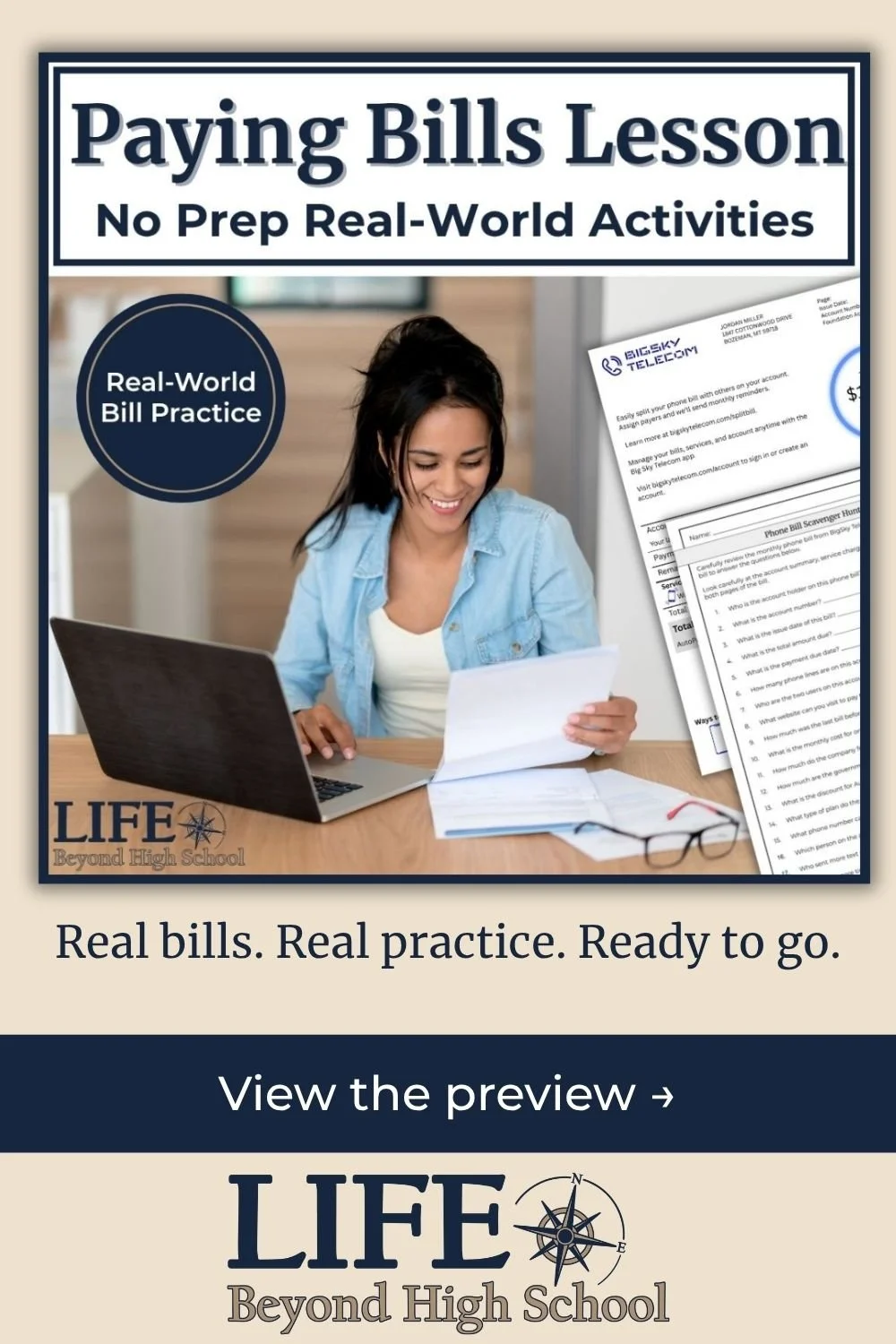
How to Teach Students to Understand and Pay Bills
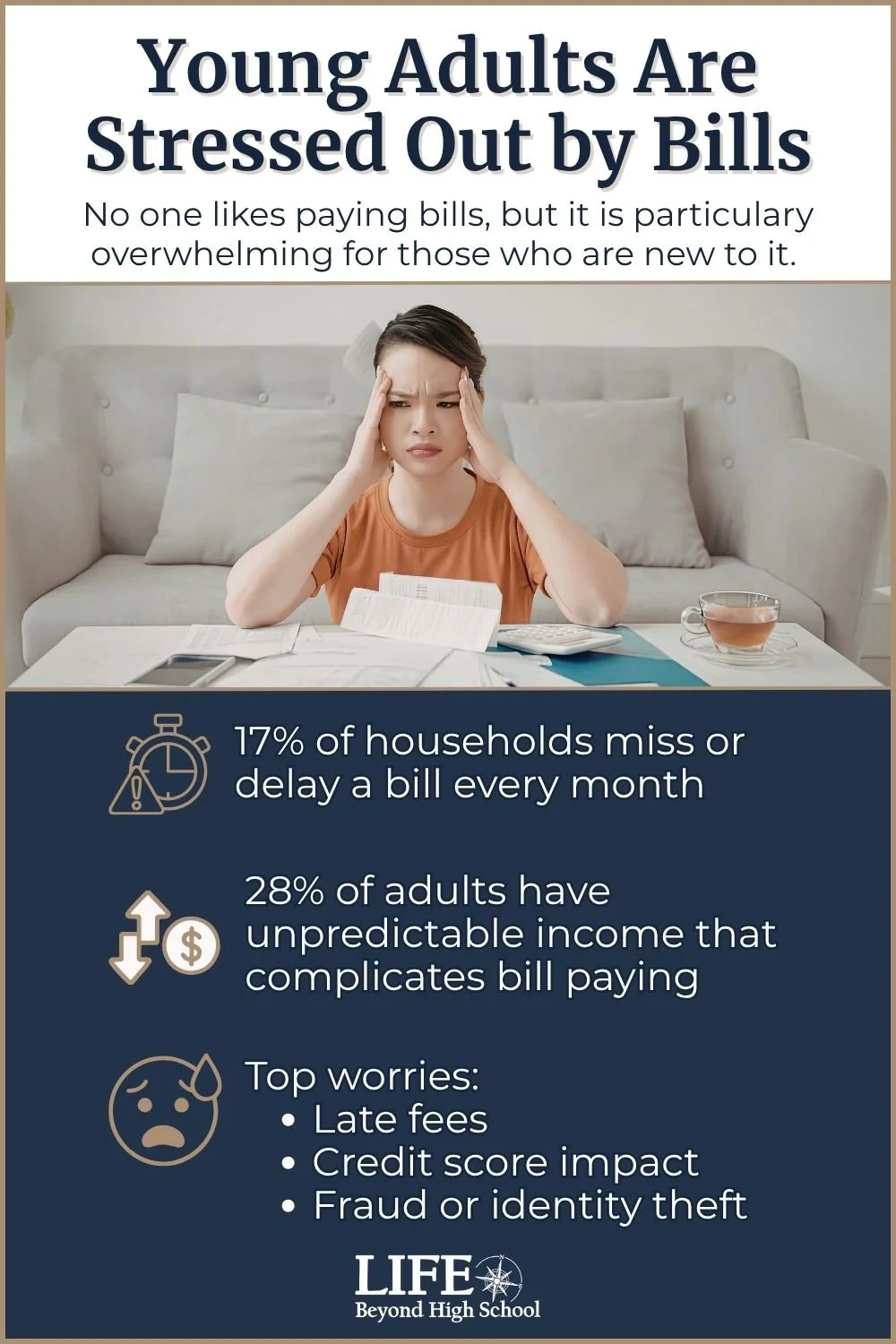
Reality check: 1 in 7 adults feel stressed about paying bills.
And for those who do, the majority worry about things like fraud, credit score impact, and late fees (doxoINSIGHTS, 2025).
Here’s the tricky part:
Most students don’t think about bills at all.
It’s not laziness. I think it’s developmental. Their brains aren’t wired yet for that level of long-term planning or awareness. Bills just… happen. For the majority of teens who live with family, the lights are just on. Phones work. Water runs. Everything behind the scenes feels automatic.
Until it doesn’t.
And suddenly, they’re adults, and they have to figure it all out in real time.
Teaching students how to pay bills and understand bills is one of the most practical life skills we can offer in high school and transition classrooms.
Why Students Struggle to Pay Bills
Most young adults learn bill-paying through trial and error.
They:
Miss payments and rack up late fees
Pay extra due to credit card surcharges
Damage their early credit without realizing it
Overpay because they don’t understand their bill
Miss opportunities for discounts (autopay, paperless billing, student rates)
Not because they don’t care.
Because no one ever showed them how it works.
And to be fair, many families are figuring it out too. If you look at the data, a lot of adults are struggling with bill-paying systems, organization, and best practices. There isn’t always a clear model to pass down.
So many students end up reinventing the wheel.
What I’ve Seen as a Teacher
I’ve taught both high school and adult education, and I’ve had a front-row seat to this learning window.
When students haven’t been taught how to manage bills, these patterns show up quickly:
❌ No system
Bills are scattered everywhere:
Email
Mail
Multiple accounts
Old addresses
Different phone numbers
There’s no central place to track anything.
❌ Missed bills
Not because students don’t intend to pay them, but because:
They forget due dates
They stopped using a service but never canceled it
The bill went somewhere they didn’t check
❌ Overpaying
This one surprises people.
Students often:
Don’t know how to read a bill or understand a utility bill
Feel overwhelmed by the language
Avoid looking too closely
So they pay:
Incorrect amounts
Unnecessary fees
Charges they could question or fix
❌ A passive mindset
This is the biggest one.
Bills feel like something that happens to them.
“This thing shows up, I pay it, and move on.”
There’s no sense of control or strategy.
What Changes When Students Learn How to Manage and Pay Bills
When students actually spend time learning how bills work, something shifts.
They:
Start recognizing patterns
Understand what they’re paying for
Ask better questions
Catch mistakes
Look for ways to save
They go from passive to proactive.
And that’s the goal. Yes, we all have to pay bills, but we don’t have to feel powerless doing it.
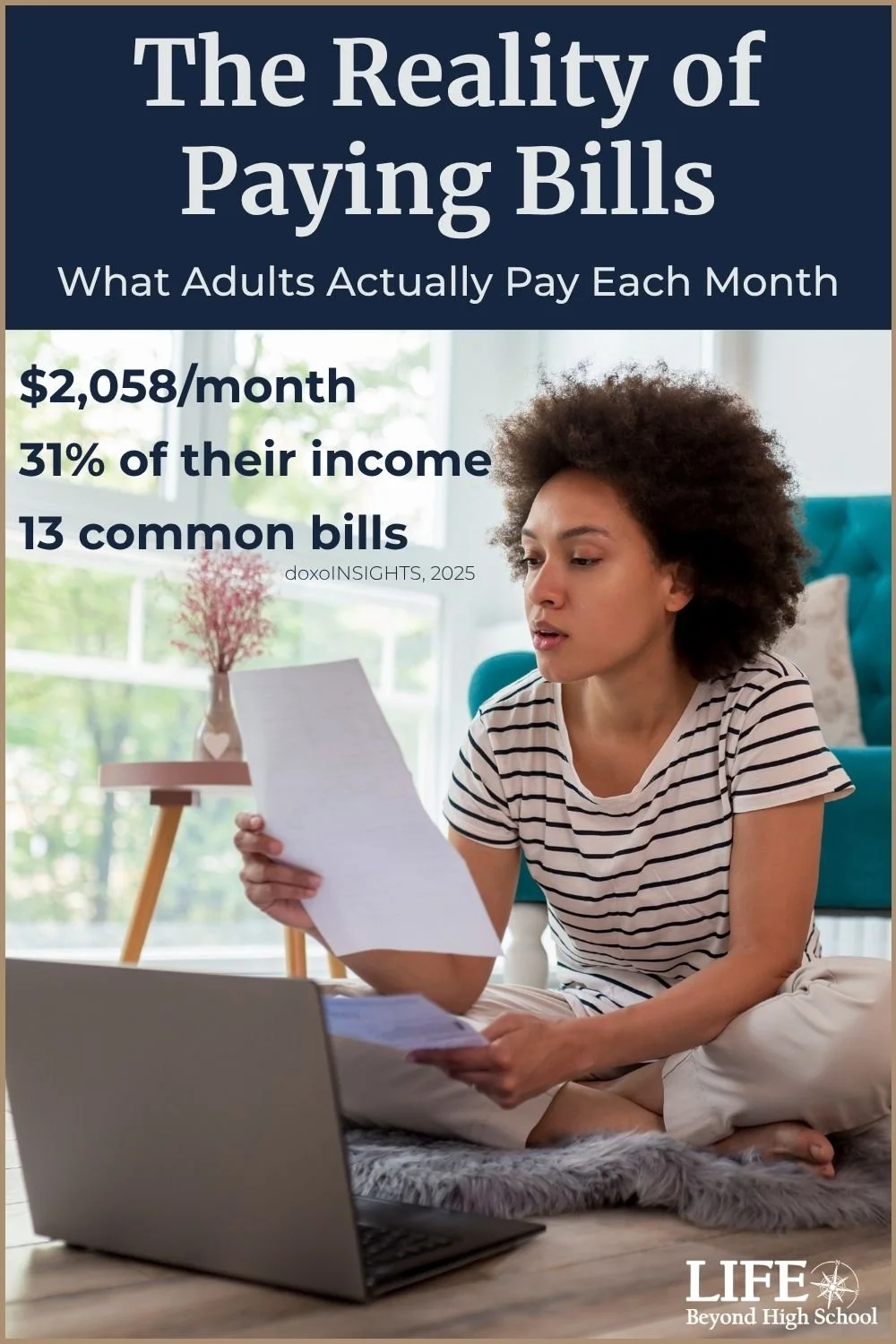
The Wake-Up Call That Changed My Perspective
I learned this the hard way myself.
Last spring, I moved to a new house. For the first eight months, our water bill was consistent, but in December it increased. I didn’t think much of it. It was winter in Alaska.
Then in January the bill went up again.
I noticed it… and then promptly ignored it.
I told myself it was just part of life in the new house.
Then one day, I came home to a note on my door from the city.
My water usage was way out of range, and we should check for a leak.
Panic.
Thankfully, it wasn’t catastrophic. It was a water heater leak in the basement that had been slowly emptying through a floor drain. There wasn’t flooding. We escaped without any major damage to the house or our belongings.
But still…
That was months of wasted water. And it took another month before it got fixed.
That was my hard-earned money literally down the drain.
What stuck with me
No one had ever taught me to treat changes in bills as a signal.
Now it’s something I always pay attention to.
And it’s something I want on my students’ radar before they’re dealing with real consequences. I literally drafted the Paying Bills Lesson while the repair technician was in my basement working on the water heater!
What Students Need to Learn to Understand and Pay Bills
It isn’t about generalities or generic-looking worksheets. When I was building my lesson, I started with a foundation and built up:
✔ Types of bills
Fixed vs. variable
Common monthly expenses
✔ How to read and understand a bill
Due dates
Usage breakdown
Fees and charges
✔ How to pay bills
Online payments
Autopay
Manual payments
There’s no one “right” way, and students need exposure to the options.
✔ What can go wrong
Late fees
Missed payments
Unexpected spikes (like my leak situation)
✔ Tips and strategies
Paying early
Setting up systems
Using discounts (autopay, paperless, student rates)
✔ Scam awareness
This is becoming a bigger part of everyday life.
The goal isn’t to prepare students for every scam, but to build good habits:
Slow down
Be skeptical
Double-check
(With consumers reporting losing more than $12.5 billion to fraud, I’ve also embedded “spot the scam” activities in my job searching and renting lessons, as areas that are particularly vulnerable to scammers.)
I know what you might be thinking: “I don’t have time to add another lesson.”
The good news is this doesn’t have to be a full unit. Even a single activity or discussion can make a difference, and this topic fits naturally into life skills, advisory, transition, or financial literacy classes.
How I Teach This in My Classroom
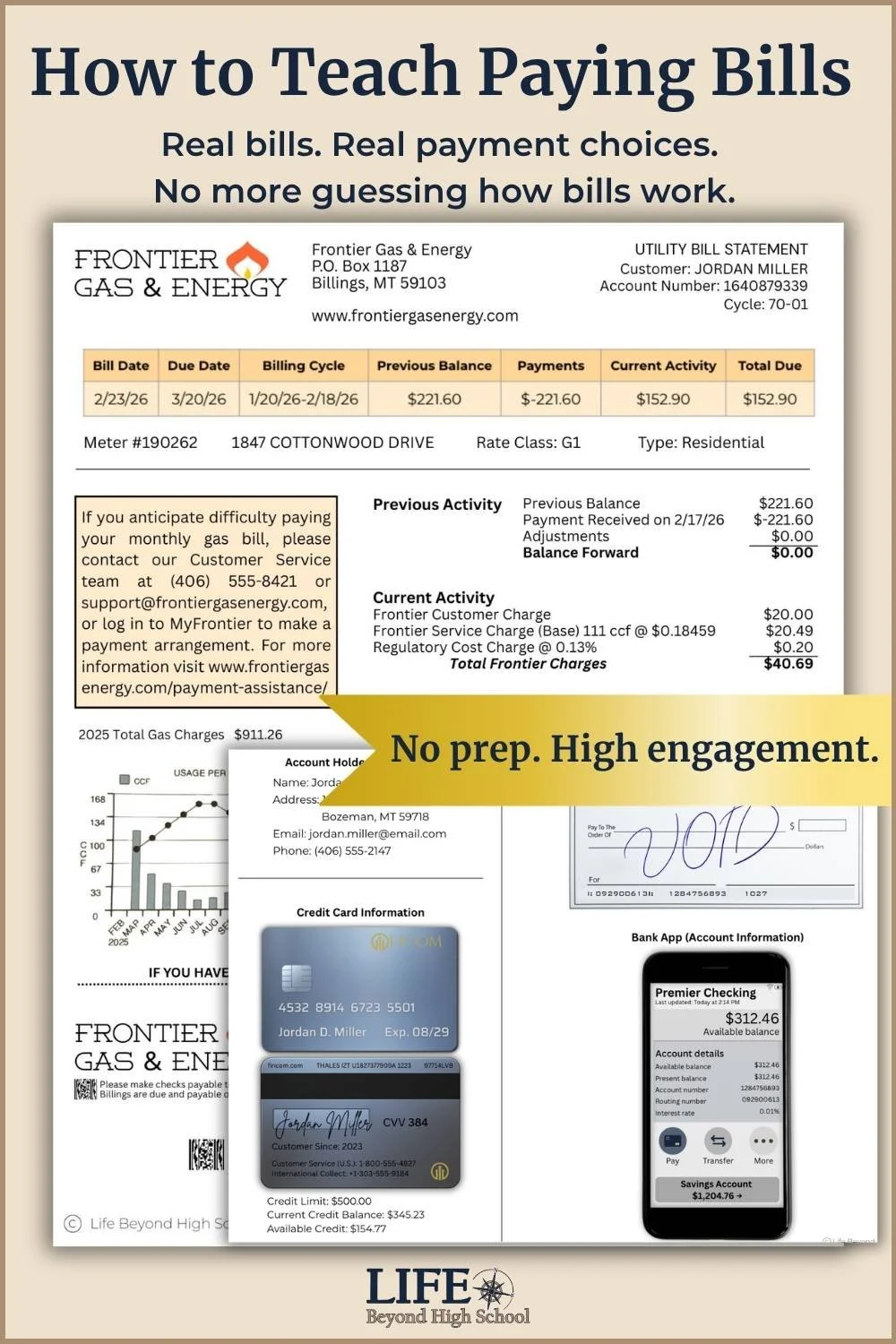
My top priority when I was building my lesson was that students not just hear about bills, but actually interact with them. This lesson focuses on helping students understand bills, read bills, and practice paying bills in a real-world way.
🔍 Phone Bill Scavenger Hunt
Students explore a realistic cell phone bill and hunt for key information.
At first, it feels overwhelming, but doing it as a scavenger hunt gamifies that challenge, and students get into it.
💳 Payment Practice Activity
Students use realistic payment information (closely modeled after real checks, cards, and banking apps) to walk through the process.
This is usually a crowd favorite.
Most have never:
Seen a full credit card number
Connected routing/account numbers to a check
Understood how everything links together
It makes the process feel both real and doable.
⚠️ Scam Awareness Section
This is always a hit!
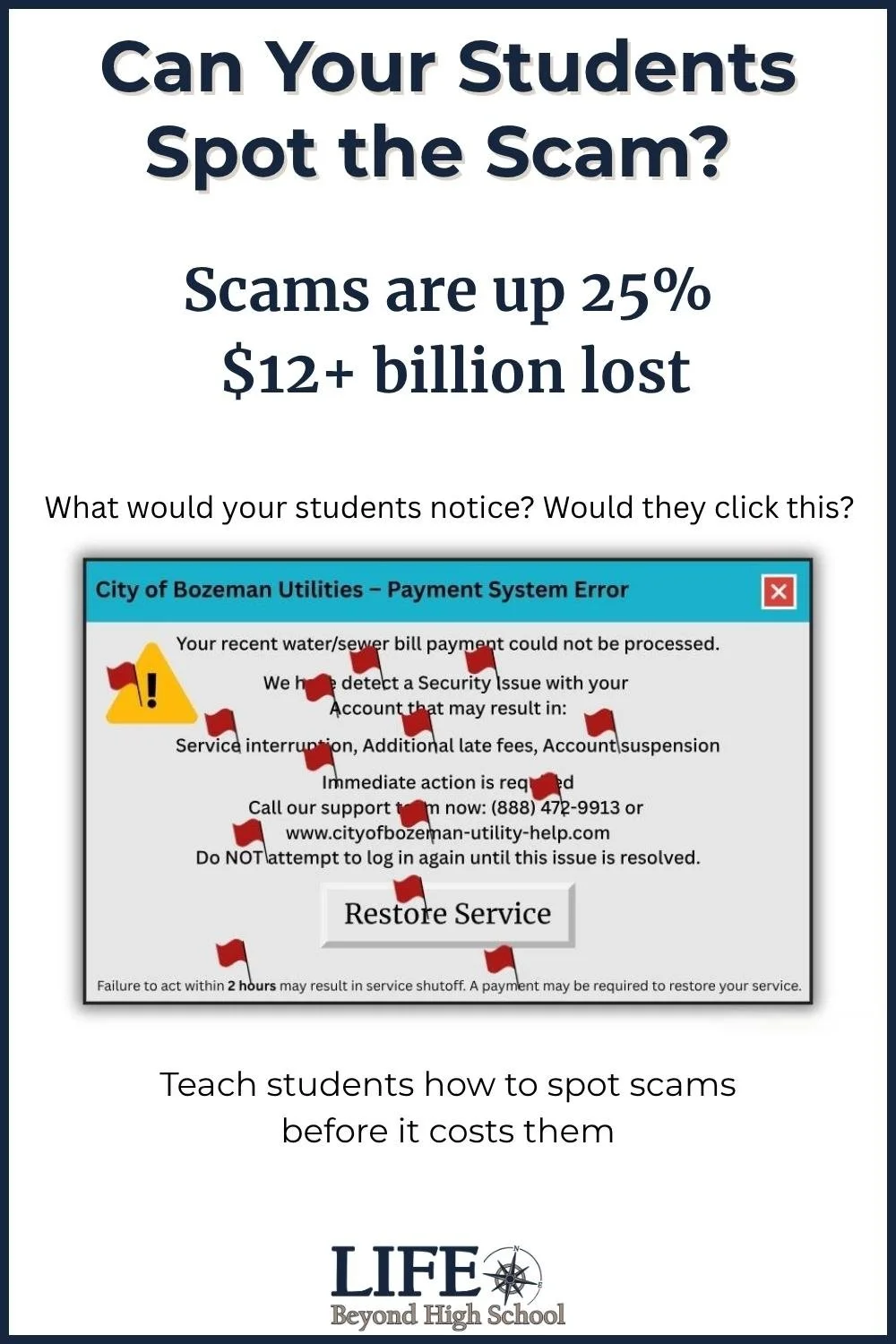
In this section, I show students a sample pop-up scam, and they identify the red flags. Then a transcript from a phone call that happens when the customer calls the number from the pop-up scam. There is also a fun bill-paying scam email. I do this activity in a few different ways. Sometimes I project the scam on the screen and have students call out the red flags. Other times, I print it and have them mark up the paper with all of their concerns. Either way, they really get into it - there is very much a “not on my watch” vibe in the room where students are personally affronted by the audacity of these fictional scammers.
Students are curious about scams (and they need to be!)
The more we expose them to:
Red flags
Patterns
Real-world examples
The better prepared they’ll be!
The Big Picture
Most adults learn how to pay bills through mistakes or trial and error.
Our students don’t have to.
If they can:
Recognize a problem early
Understand what they’re looking at
Have a simple system
They can avoid a lot of unnecessary stress (and a lot of wasted money, *cringe*).
If You Want to Teach This Without Starting From Scratch
In my heart, I’m a teacher, not a salesperson.
But I’ll admit that this lesson took a long time to build.
Creating realistic bills, designing activities, thinking through scams, building in answer reveals… it was a process.
If you want to recreate something like this for your classroom, I fully support that.
And if you’d rather save the time and use something that’s ready to go, I’ve got a lesson that walks students through all of it step-by-step.
👉 You can check it out here: Paying Bills Lesson
It’s also included in my Life After High School Transition Activities – Independent Living Skills Unit, along with lessons on renting, paperwork, and more real-world skills.
Final Thought
Students don’t need to master everything about bills before they graduate.
But they do need exposure to real-world skills like how to pay bills and manage bills.
Because once they’re on their own, the learning curve is steep and expensive.
Happy teaching!