Job Application Lesson for High School Students
Applying for a first job can feel intimidating, especially when students aren’t sure what employers expect.
This ready-to-teach Job Application Lesson walks high school students through the application process step by step. Students learn what information they’ll need, what counts as experience, how to choose references, which mistakes can hurt their chances, and what happens after they click “submit.”
Along the way, they explore real online applications, analyze a fictional student’s not-so-great application, and create an Application Master Sheet they can reuse when applying for future jobs.
37-slide lesson | PowerPoint + Google Slides | Printable + digital activities
Teach Students How Job Applications Really Work
Many students have never been explicitly taught how to complete a job application.
What should they put down if they’ve never had a job? Who counts as a professional reference? What information should they have ready before starting an online application? And what are employers actually looking for?
This lesson makes the process concrete and manageable while helping students develop the judgment and professionalism they’ll need when applying for real jobs.
Students Learn How To:
Navigate paper and online job applications
Understand the different sections of an application
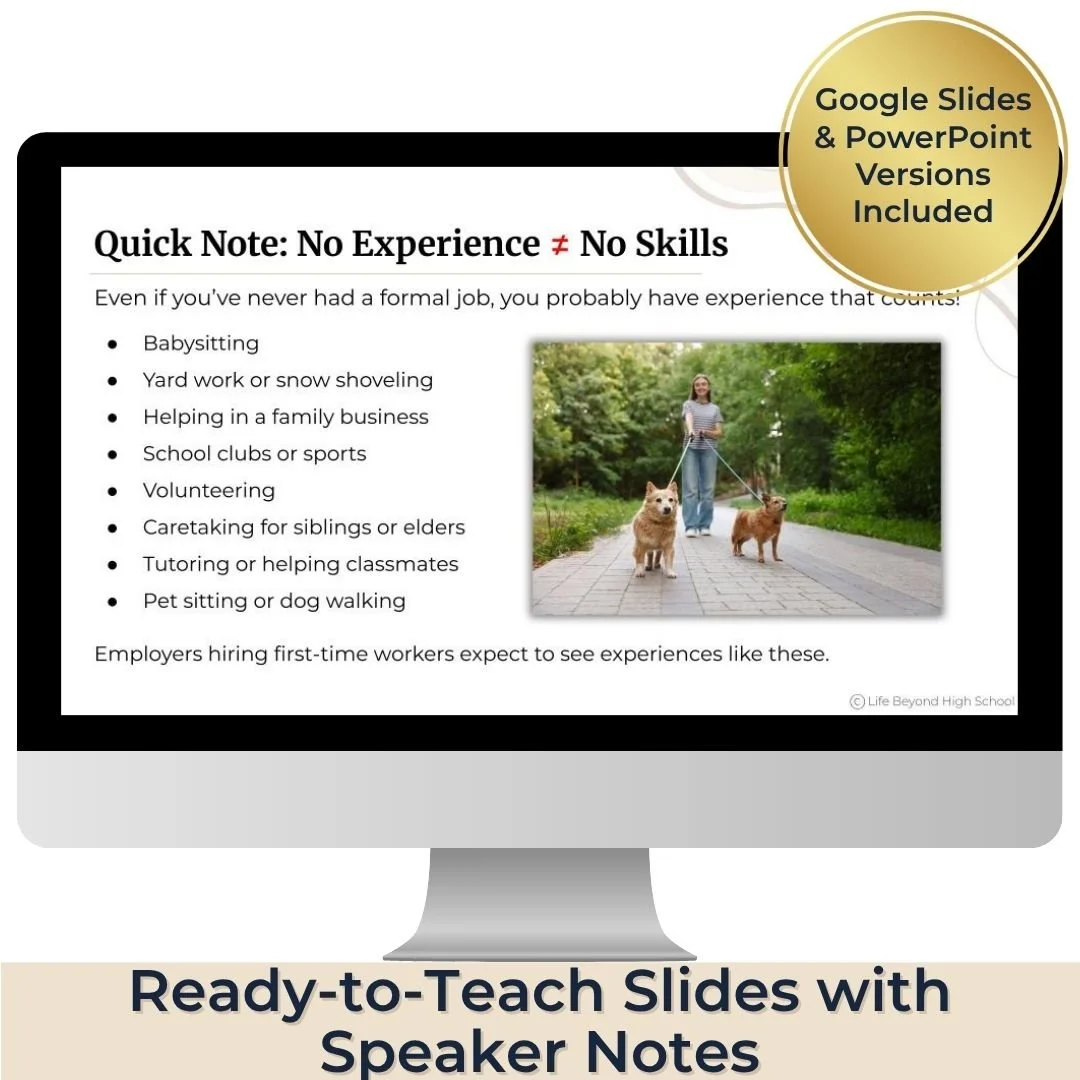
Identify experiences they can include, even without a traditional job
Choose appropriate professional references
Recognize common application mistakes and red flags
Submit applications and supporting documents
Understand what happens after an application is submitted
Follow up appropriately and professionally
Real-World Job Application Activities
Application Scavenger Hunt
Students explore real company career websites to see what modern job applications actually look like.
They locate applications, investigate hiring portals and account or login requirements, and notice the information employers ask applicants to provide.
Instead of encountering an online application system for the first time when a real job is on the line, students get a chance to explore the process ahead of time.
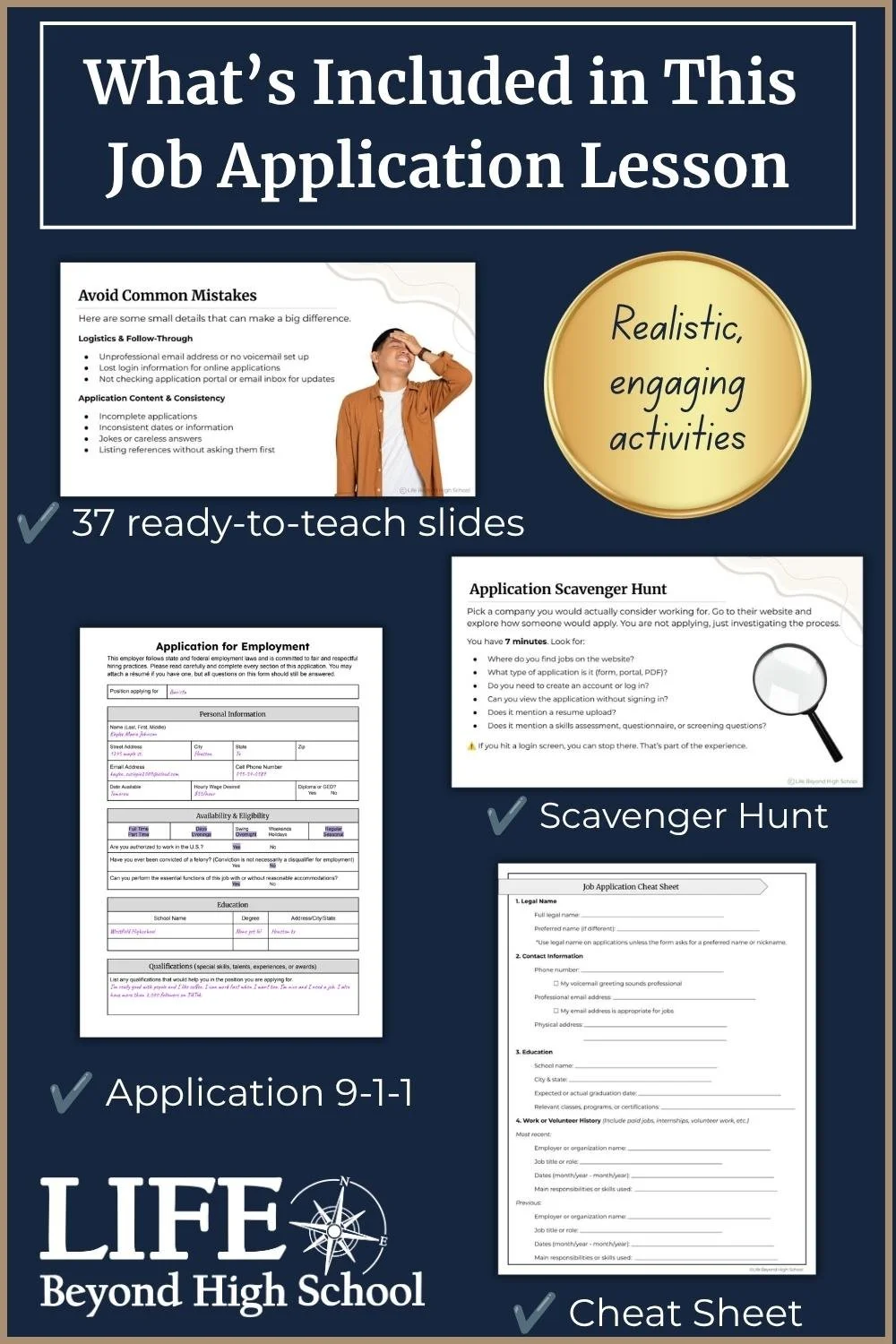
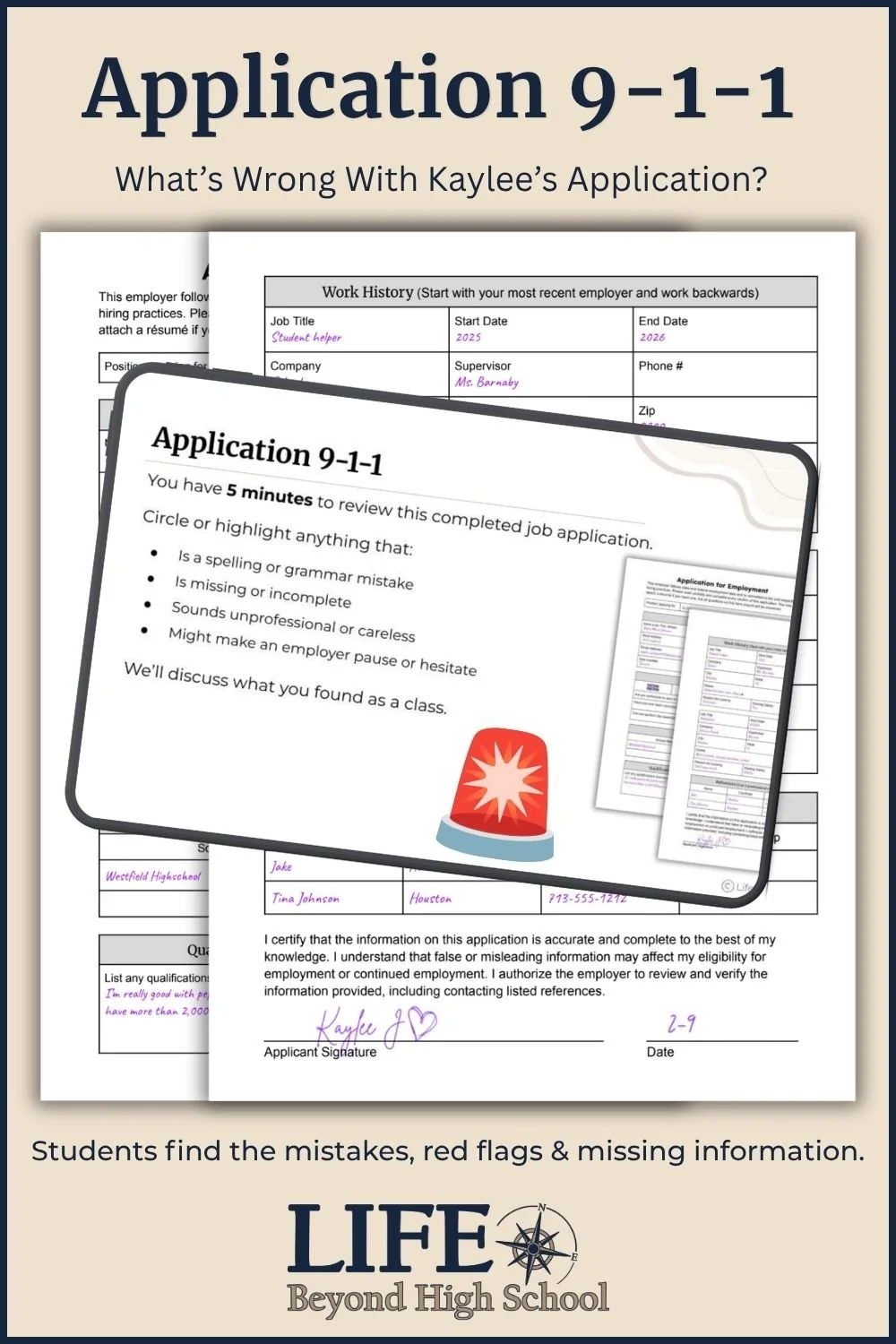
Application 9-1-1: What Did Kaylee Do?!
Meet Kaylee Marie.
Kaylee has completed a job application, but she could use some help.
Students examine her application for missing information, inconsistencies, questionable choices, and other red flags. They circle mistakes, offer advice, and practice viewing an application from an employer’s perspective.
It’s one of those activities where students get invested because they genuinely want to figure out what Kaylee did wrong.
Animated answer slides make it easy to review the application together as a class.
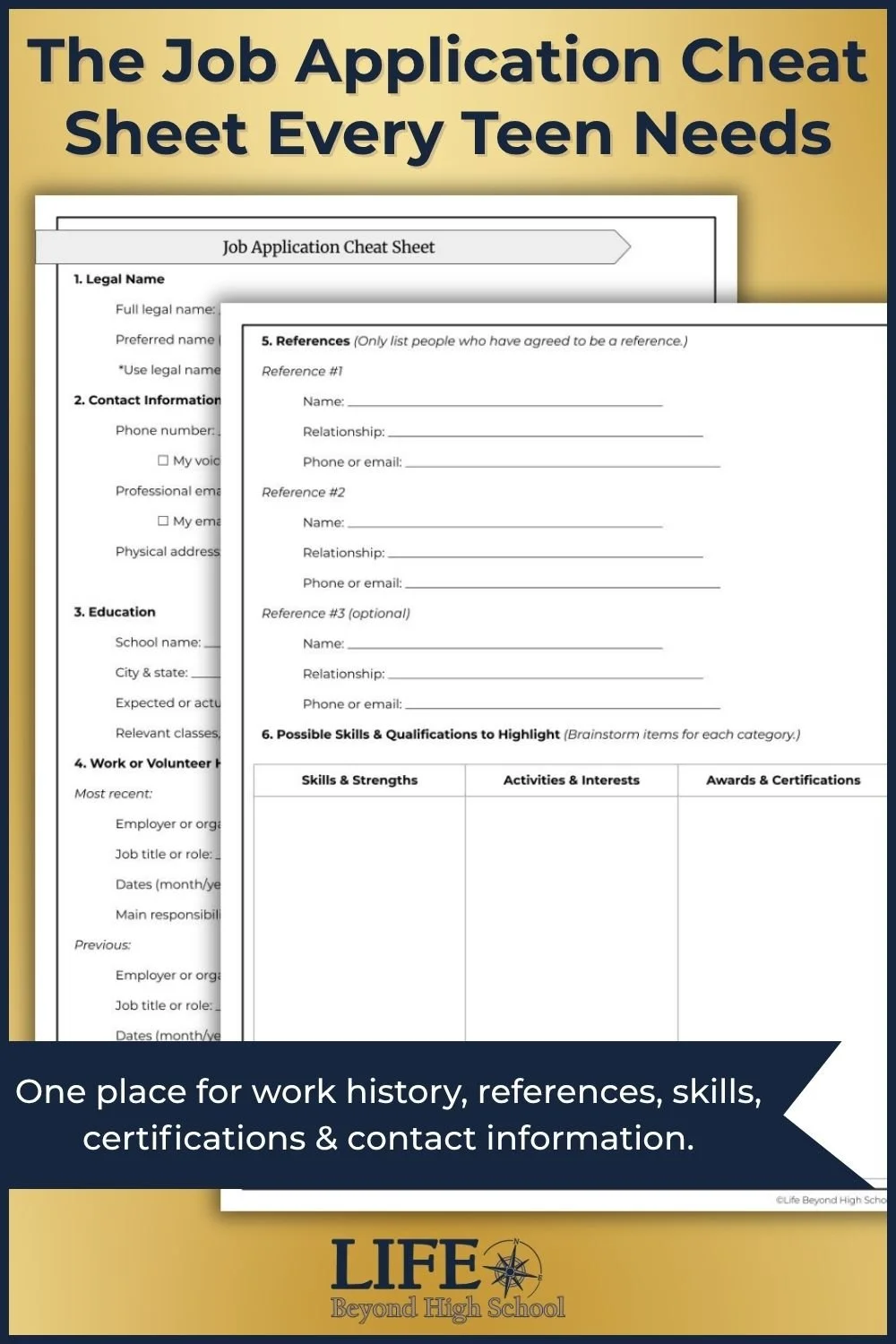
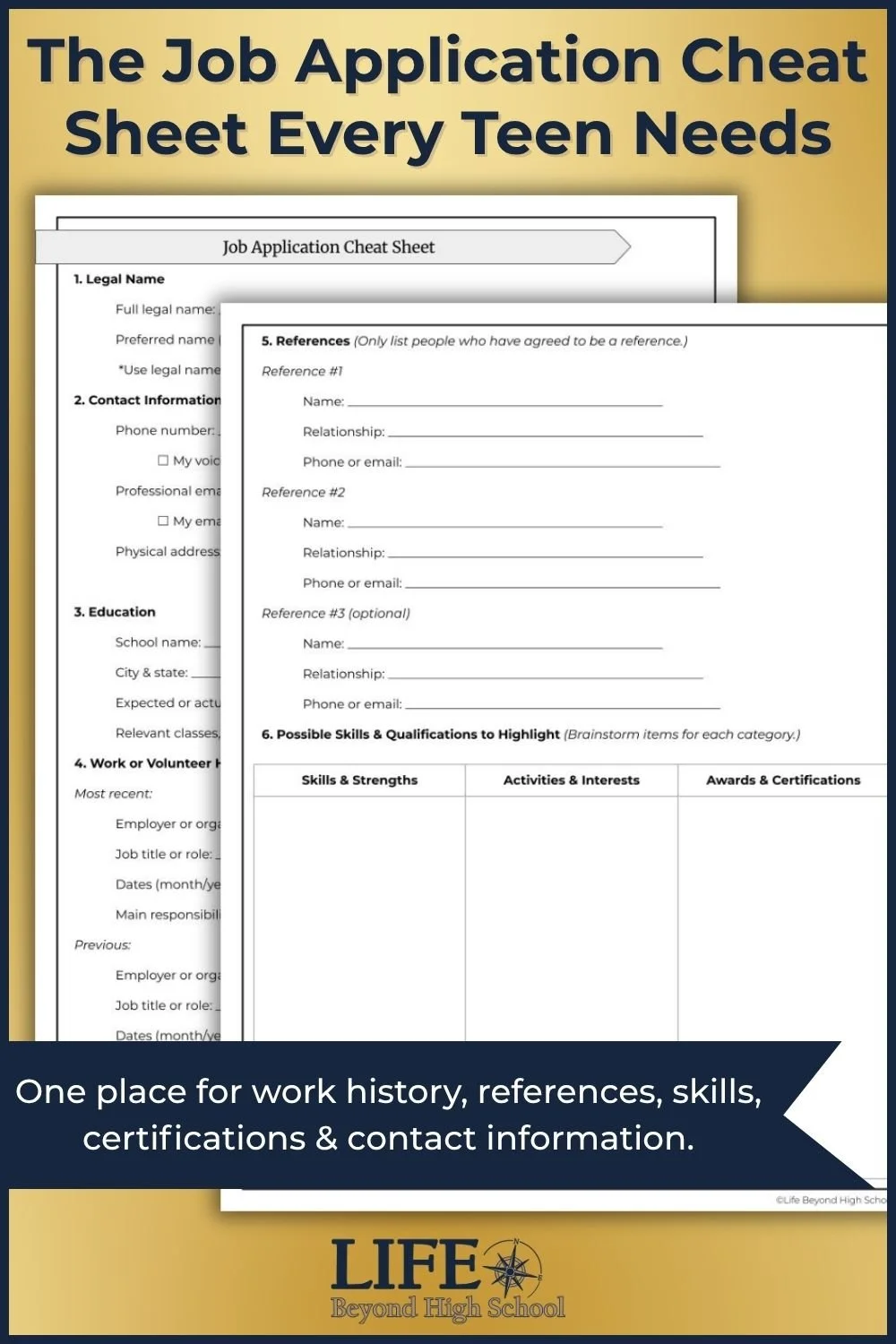
Create an Application Cheat Sheet
Dates. Addresses. Supervisor names. Phone numbers. References.
Students often know the information they need for an application, but not necessarily when they’re sitting in front of one.
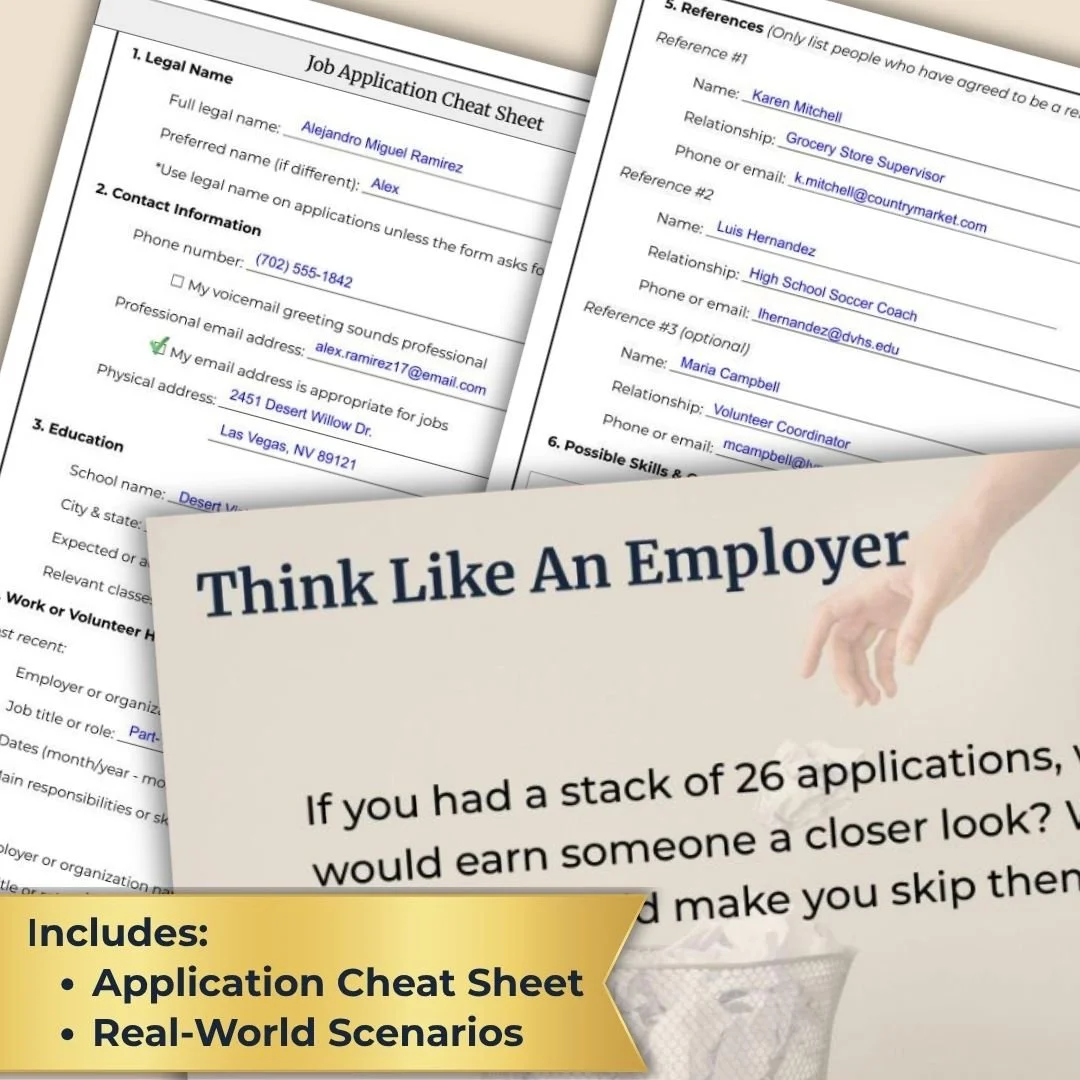
Students create their own reusable Application Master Sheet with their contact information, work history, skills and strengths, certifications, and references.
They can save it and pull it up whenever they complete a future application instead of starting from scratch each time.
Printable and digital versions are included.
Build Career Readiness Through Realistic Scenarios
Throughout the lesson, students also work through practical questions they’re likely to encounter during a real job search:
What makes an application stand out? What raises a red flag? Who should you use as a reference? And who should you avoid? When is it appropriate to provide your Social Security number?
These discussions help students understand that completing an application is about more than filling in blanks. They start thinking about how their choices might look to the person reviewing the application. Read more about why career readiness is more than career exploration.

Everything You Need to Teach the Lesson
This ready-to-use resource includes:
37-slide PowerPoint presentation
Google Slides version
Teacher speaker notes
Built-in discussion prompts
Application Scavenger Hunt
Application 9-1-1 sample application activity
Animated answer slides
Application Master Sheet
Printable and digital student options
Want to take a closer look? Preview the Job Application Lesson to see sample slides, activities, and student materials before purchasing.The complete lesson is designed for approximately 60–75 minutes, or it can easily be divided into shorter 10–15 minute segments.
Great for Career Readiness & Transition Classes
The Job Application Lesson works well in:
Career readiness • Special education transition • CTE • Advisory • Life skills • Adult education • Employment preparation
It’s especially useful for students preparing for their first job, including students who don’t yet have traditional work experience.
Teaching the Full Hiring Process?
If you’re teaching a larger employment or career readiness unit, the Getting a Job Unit includes this lesson along with resources for finding jobs and creating a resume. Purchasing the unit also costs less than purchasing the resources separately.
Help Students Apply With Confidence
A job application may be one of a student’s first professional interactions with an employer. Give students a chance to practice the process, make mistakes, ask questions, and learn what employers expect before a real opportunity is on the line.