Important Paperwork & ID Lesson for High School Students
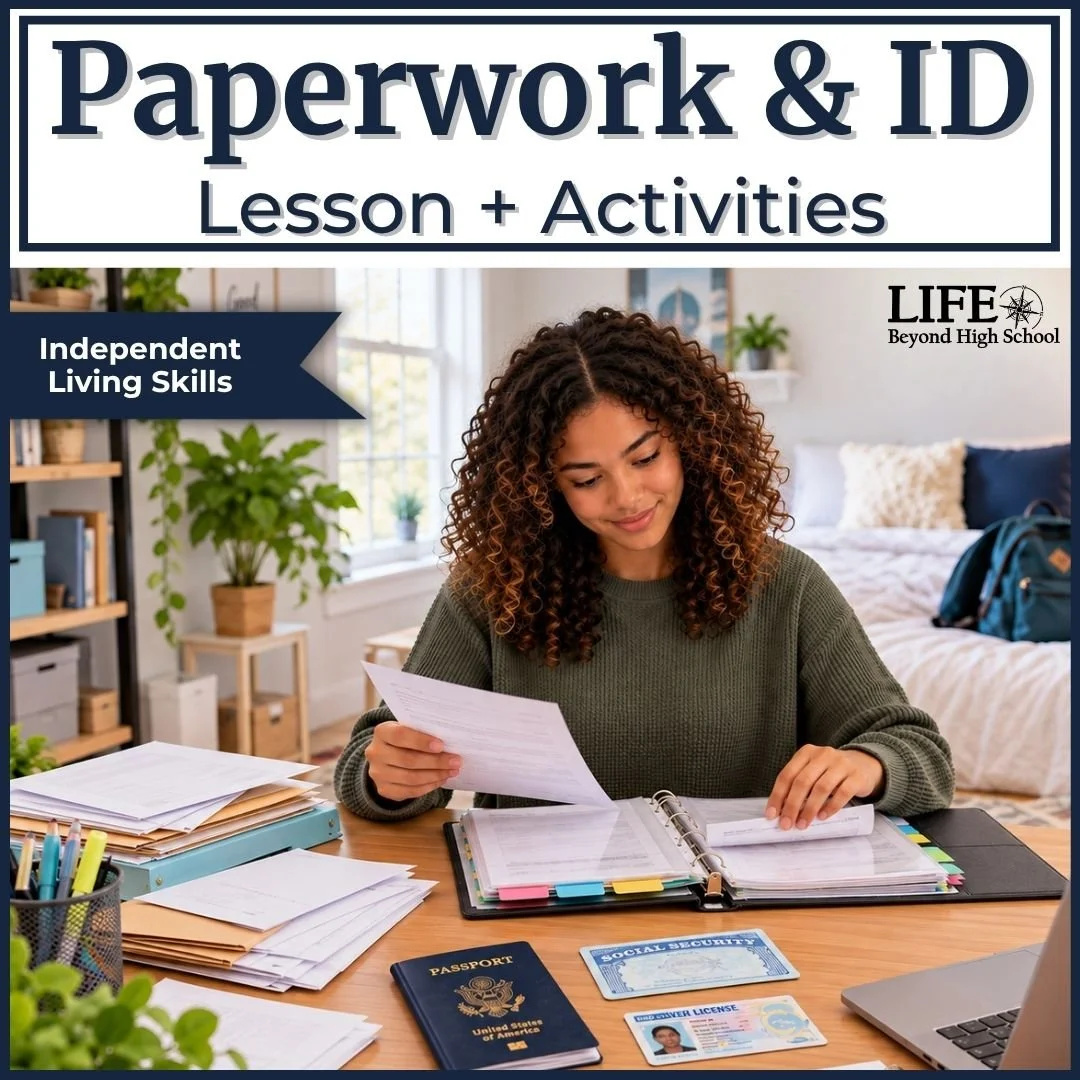
Help students learn how to manage the documents and identification they’ll need as they become more independent.
This important paperwork lesson introduces students to birth certificates, Social Security cards, identification, document organization, personal information safety, and other practical skills for life after high school.
Students don’t just learn what these documents are. They practice deciding what paperwork to keep, consider where important documents are stored, and identify steps they can take to become more organized and prepared.
Teach Students to Manage Important Documents
Important paperwork can be confusing, especially when students are encountering these documents and responsibilities for the first time.
Throughout the lesson, students learn:
What birth certificates are and why they are important
How Social Security numbers and cards are used and protected
How to get or replace important documents
Situations in which adults may need identification
Why identification requirements vary depending on the situation
How to organize and safely store physical and digital documents
How to protect sensitive personal information
Basic information about privacy rights
How to identify their own next steps for managing important paperwork
The goal isn’t for students to memorize a list of documents. It’s to help them understand what these documents are, why they matter, and what to do when they need them.
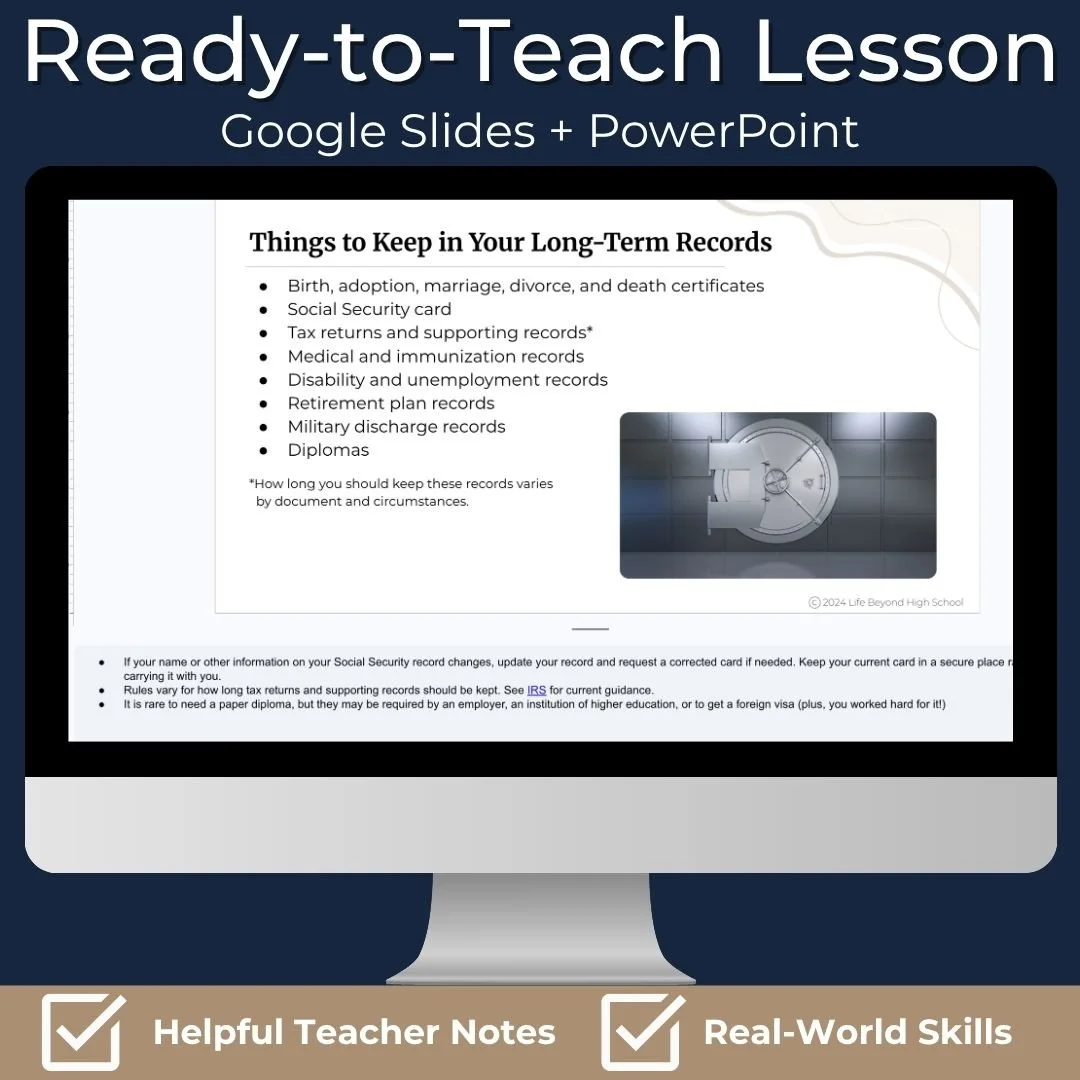
How Long Should You Keep Important Paperwork?
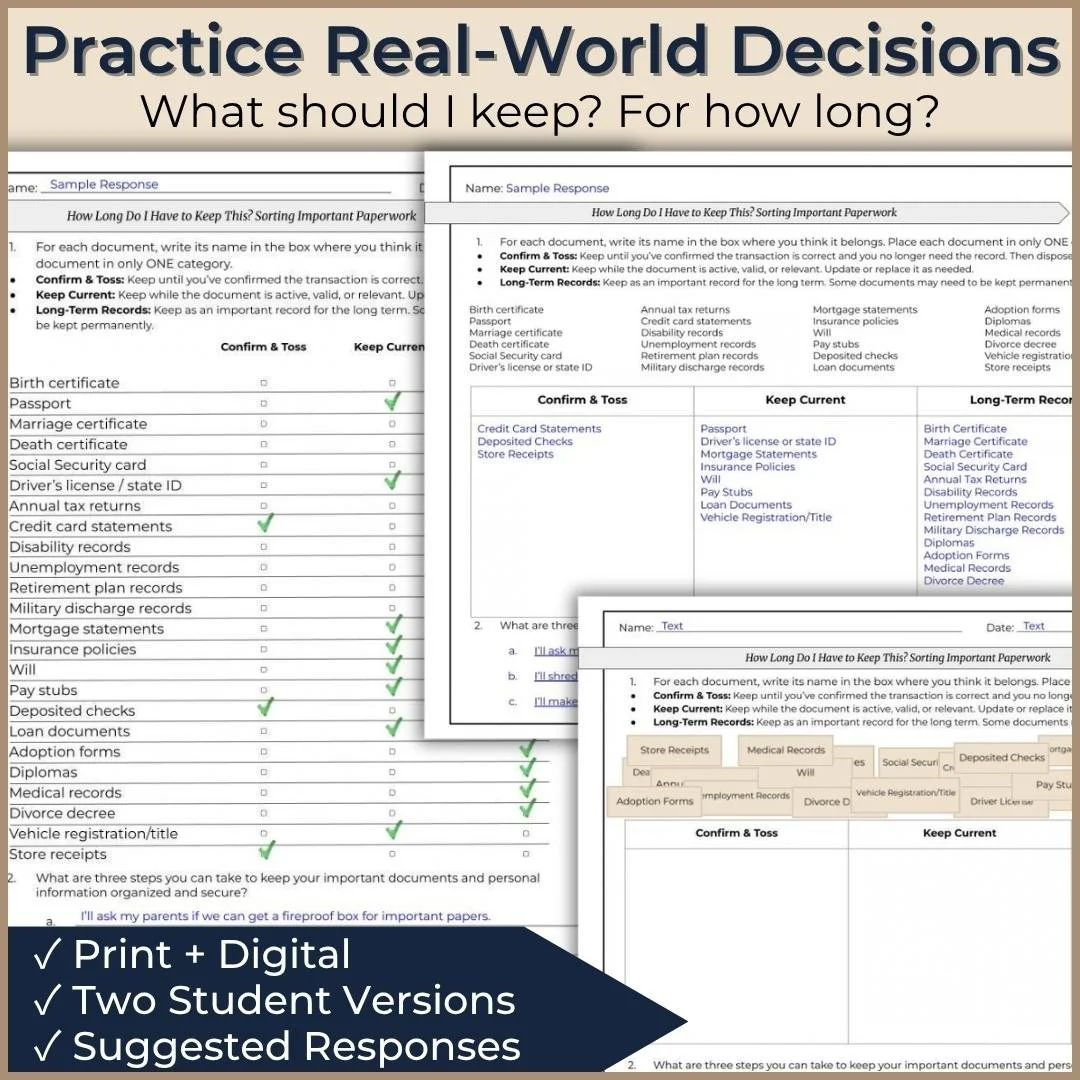
This hands-on activity asks students to make decisions about common adult paperwork.
Students sort documents into three categories:
Confirm & Toss • Keep Current • Long-Term Records
They consider items such as tax returns, insurance policies, pay stubs, identification, medical records, receipts, vehicle documents, and vital records.
There isn’t always one universal answer. How long someone should keep a document can depend on the document, their circumstances, and why they may need it later. The activity helps students focus on the reasoning behind each decision rather than memorizing a complicated retention schedule.
Two student versions are included, including a checkbox option for students who benefit from less writing.
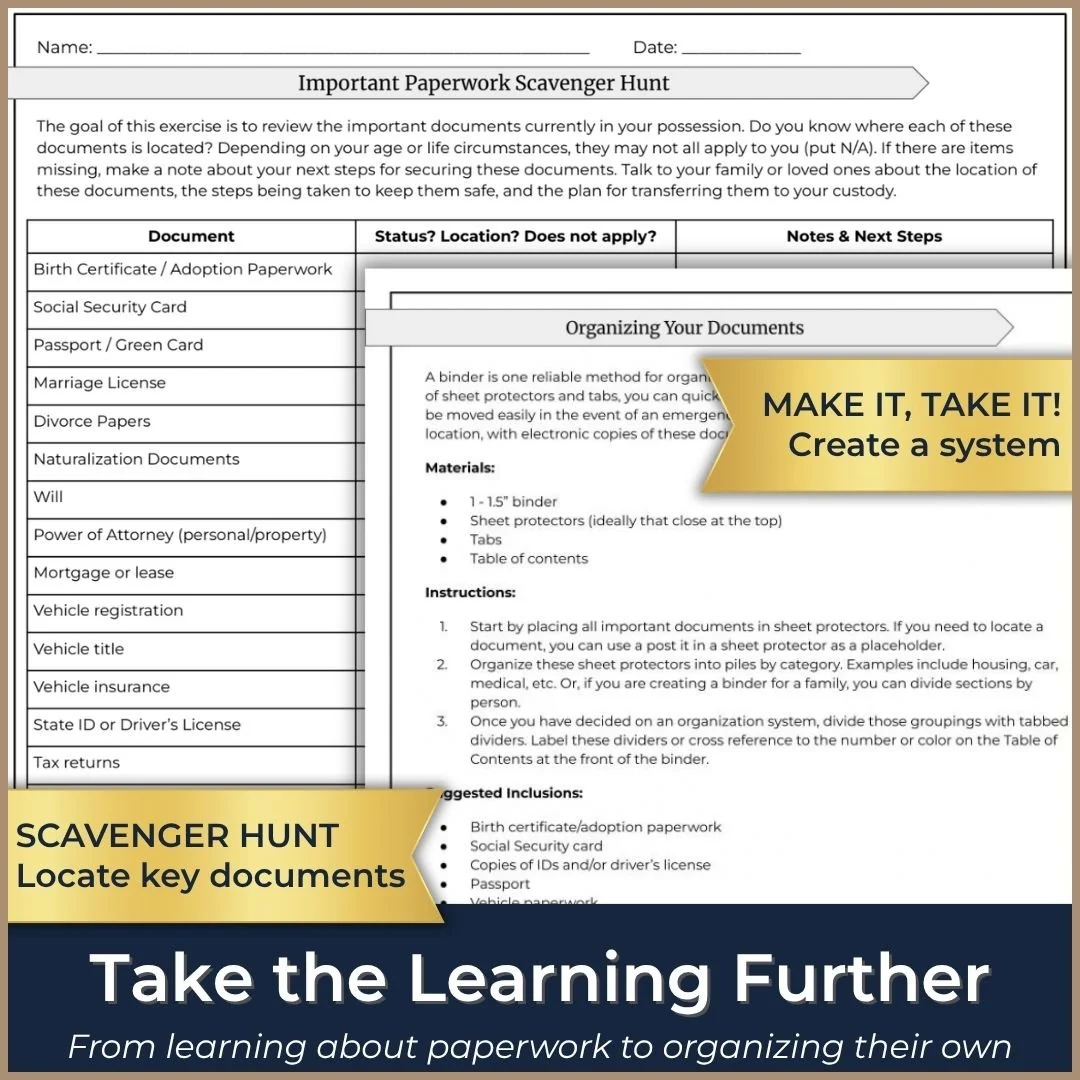
Important Paperwork Scavenger Hunt
Knowing what a birth certificate is is one thing. Knowing whether you have access to yours is another.
The Important Paperwork Scavenger Hunt helps students think about which documents they have access to, where those documents are stored, and what steps they may still need to take.
Students can begin the activity in class and continue using it as they prepare for adulthood, making it a practical addition to transition planning and independent living instruction.
Students do not need to (and should not) share Social Security numbers, identification numbers, immigration information, or other sensitive personal information to complete the lesson.
What’s Included in the Paperwork & ID Lesson
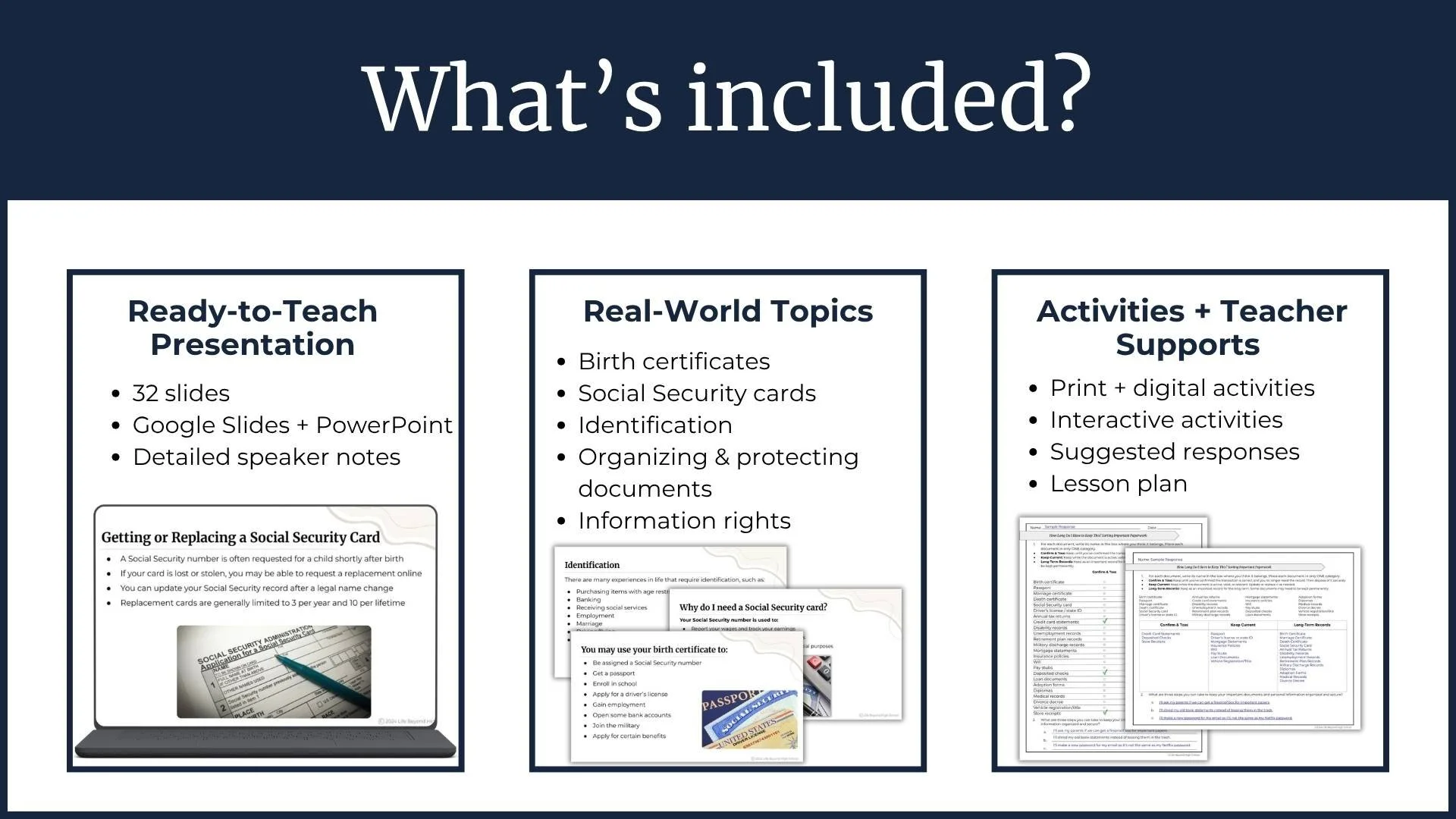
Everything is classroom-ready:
32-slide presentation in Google Slides and Microsoft PowerPoint
Helpful speaker notes with additional information and teaching guidance
Paperwork sorting activity with two student versions
Print and digital activity options
Suggested responses and explanations
Important Paperwork Scavenger Hunt
Optional Make It, Take It paperwork organization activity
Word search
Crossword
Vocabulary definitions
Exit ticket
Answer keys and sample responses
Lesson plan with objectives, considerations, and implementation ideas
Who Is This Life Skills Lesson For?
This lesson works well for:
High school life skills classes
Special education transition instruction
Independent living skills
IEP or ITP transition goals
Advisory or homeroom
Study skills or adulting units
Postsecondary transition planning
Adult living and adult education programs
Students may have very different experiences with personal documents. Some may not know where their documents are stored, may not currently have access to them, or may have family or personal circumstances that make these topics more complicated.
The lesson is designed to teach students about important paperwork without assuming that everyone has the same documents, experiences, or access.
Teaching Students About Personal Information & Privacy
Managing paperwork isn’t just about keeping track of documents. Students also need to know how to protect the personal information those documents contain.
The lesson introduces practical ways to protect sensitive information, including safely storing physical and digital documents, securely disposing of paperwork, protecting Social Security information, and thinking carefully about when personal information should be shared.
Students are also introduced to basic information about privacy rights and how access to personal information can change as they become adults.

Preparing Students for the Paperwork of Adulthood
Paperwork has a way of showing up everywhere in adult life: starting a job, continuing education, renting a home, managing finances, applying for services, and completing everyday tasks.
Teaching students about these documents before they need them gives them time to ask questions, figure out what they already have, and identify what they still need to learn or do.
For more ideas and background on teaching this topic, read Preparing Students to Manage the Paperwork of Adulthood.
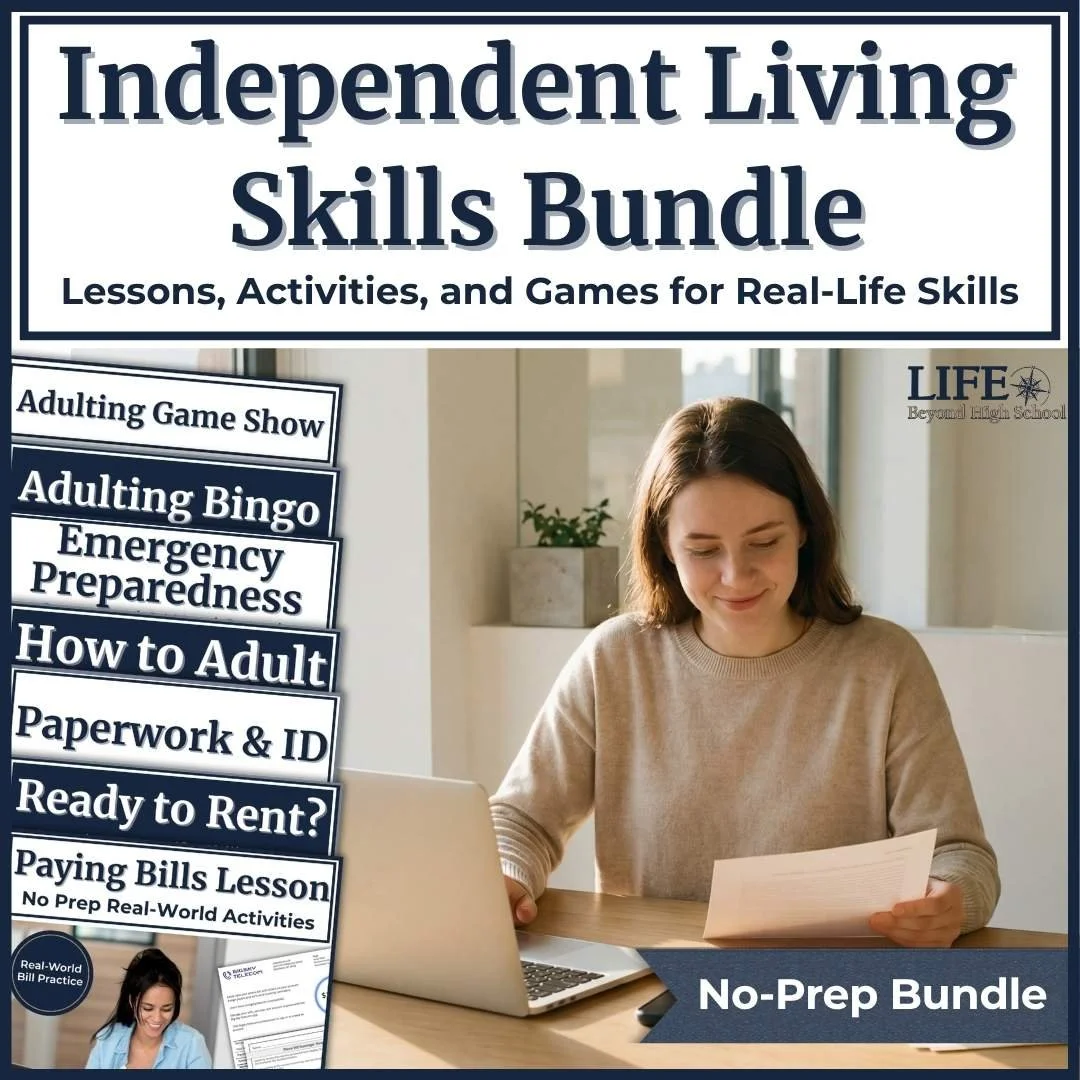
Teaching a Full Independent Living Unit?
The Paperwork & ID Lesson is also included in the Life After High School – Independent Living Skills Bundle, along with lessons and activities on topics such as renting an apartment, paying bills, emergency preparedness, and other real-world responsibilities.
If you’re planning a larger independent living or transition unit, you can save by purchasing the bundle.
Help Students Get Organized for Life After High School
Give students a practical introduction to the paperwork and identification they’ll encounter as they become more independent.
With ready-to-teach slides and hands-on activities, students can begin building the knowledge and organization skills they’ll use long after high school.