Paying Bills Lesson for High School Students
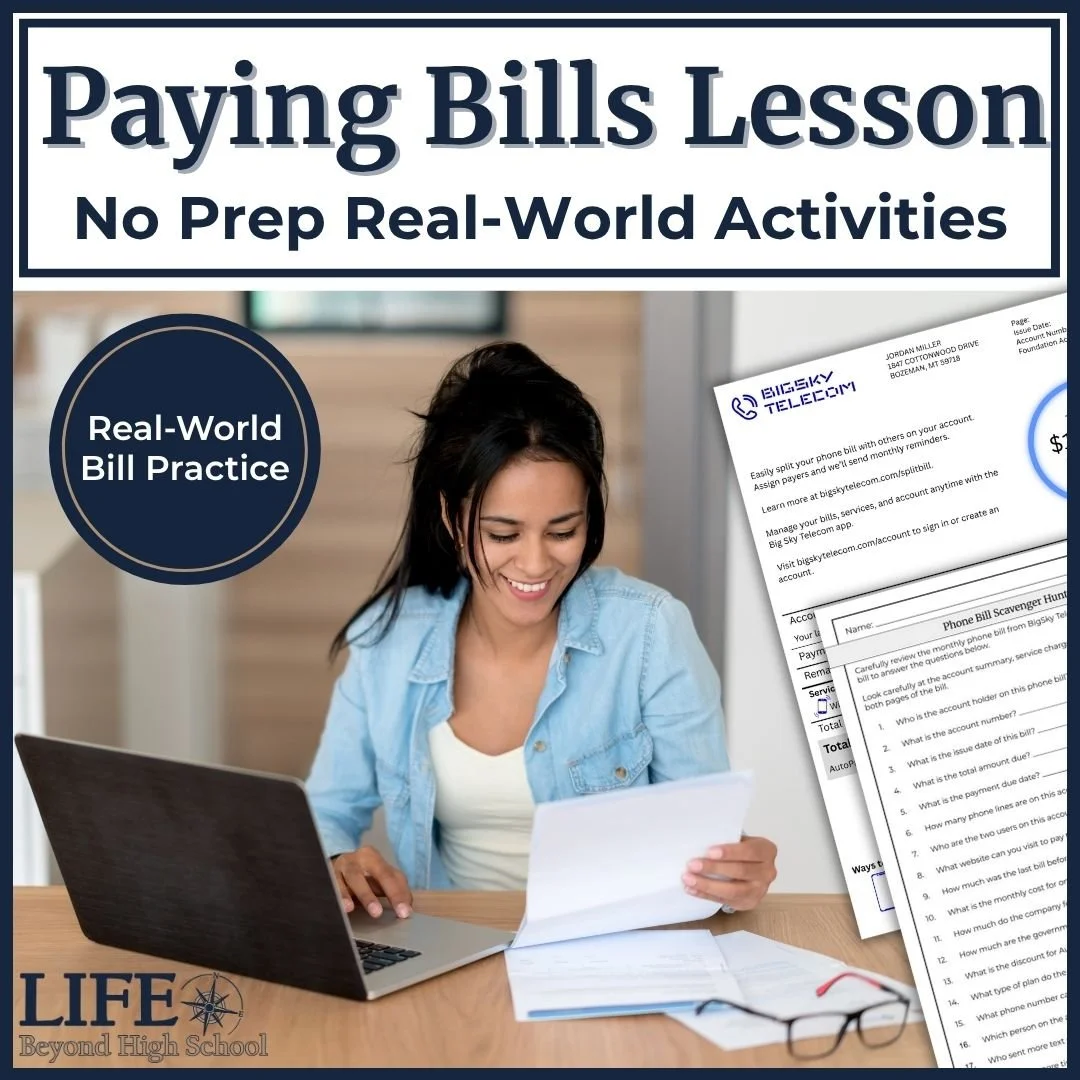
Teaching students how to pay bills is about more than remembering a due date. Students need to know how to read a bill, understand what they're being charged, choose a payment method, recognize when something doesn't look right, and know what to do when things go wrong.
This ready-to-teach financial literacy lesson gives high school students a chance to actually work through the process: reading realistic bills, choosing payment methods, dealing with unexpected expenses, and recognizing common payment scams.
Real-World Practice Paying Bills
For many teens, bills are largely invisible. The lights turn on, phones work, and water runs without students seeing everything happening behind the scenes.
Then adulthood arrives, and suddenly they are expected to understand due dates, account numbers, billing cycles, payment methods, late fees, autopay, and unexpected charges.
Instead of waiting for students to learn through trial and error, this lesson lets them practice those skills before their own money and credit are on the line.
What Students Learn About Paying Bills
Students build practical skills they can use after high school, including:
Identifying common types of bills and payment schedules
Finding important information such as the amount due, due date, charges, and billing cycle
Reading and interpreting realistic phone and utility bills
Comparing payment methods, including debit cards, credit cards, checks, and ACH/bank transfers
Understanding autopay and other bill-management options
Responding to an unexpectedly high bill
Knowing what to do when a payment is missed or a bill can't be paid on time
Recognizing common bill-payment scams and warning signs
Give Students Real Practice Paying Bills
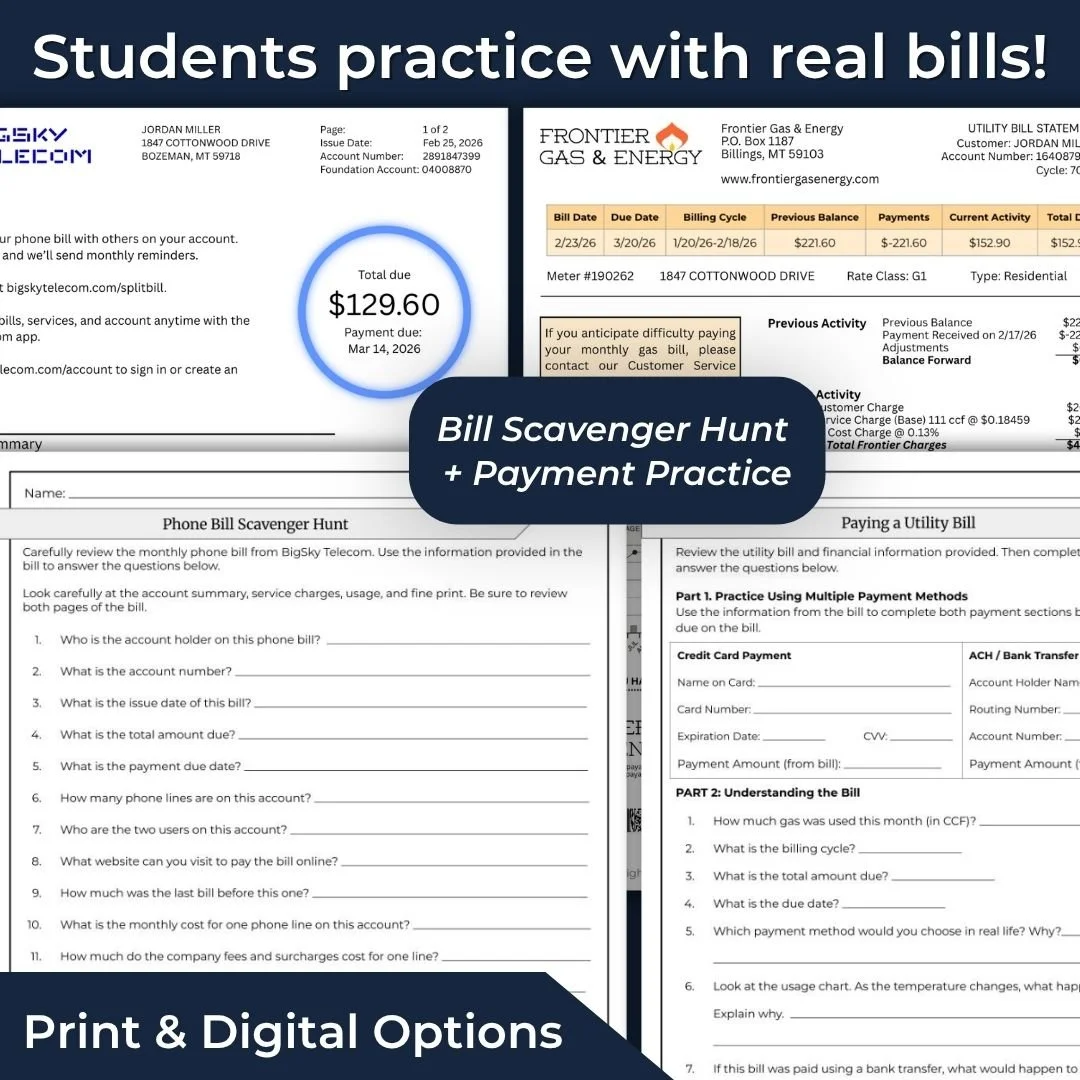
This lesson moves beyond definitions and generic worksheets. Students interact with realistic bills and financial information so they can see how bill-paying actually works.
Read a Realistic Phone Bill
Students complete a phone bill scavenger hunt, searching for account information, charges, due dates, usage, fees, and other details they may encounter on a real bill.
Practice Paying a Utility Bill
Students work with a realistic utility bill and financial information to practice making payments using a credit card and ACH/bank transfer.
They learn where to find the information they need from checks, cards, and bank accounts and how that information is used to make a payment.
Solve Real-World Bill Problems
What happens when a bill is much higher than expected? What if you miss a payment? What if you can't afford to pay the full amount?
Students work through situations that require them to look beyond the total due and decide what they would do next.

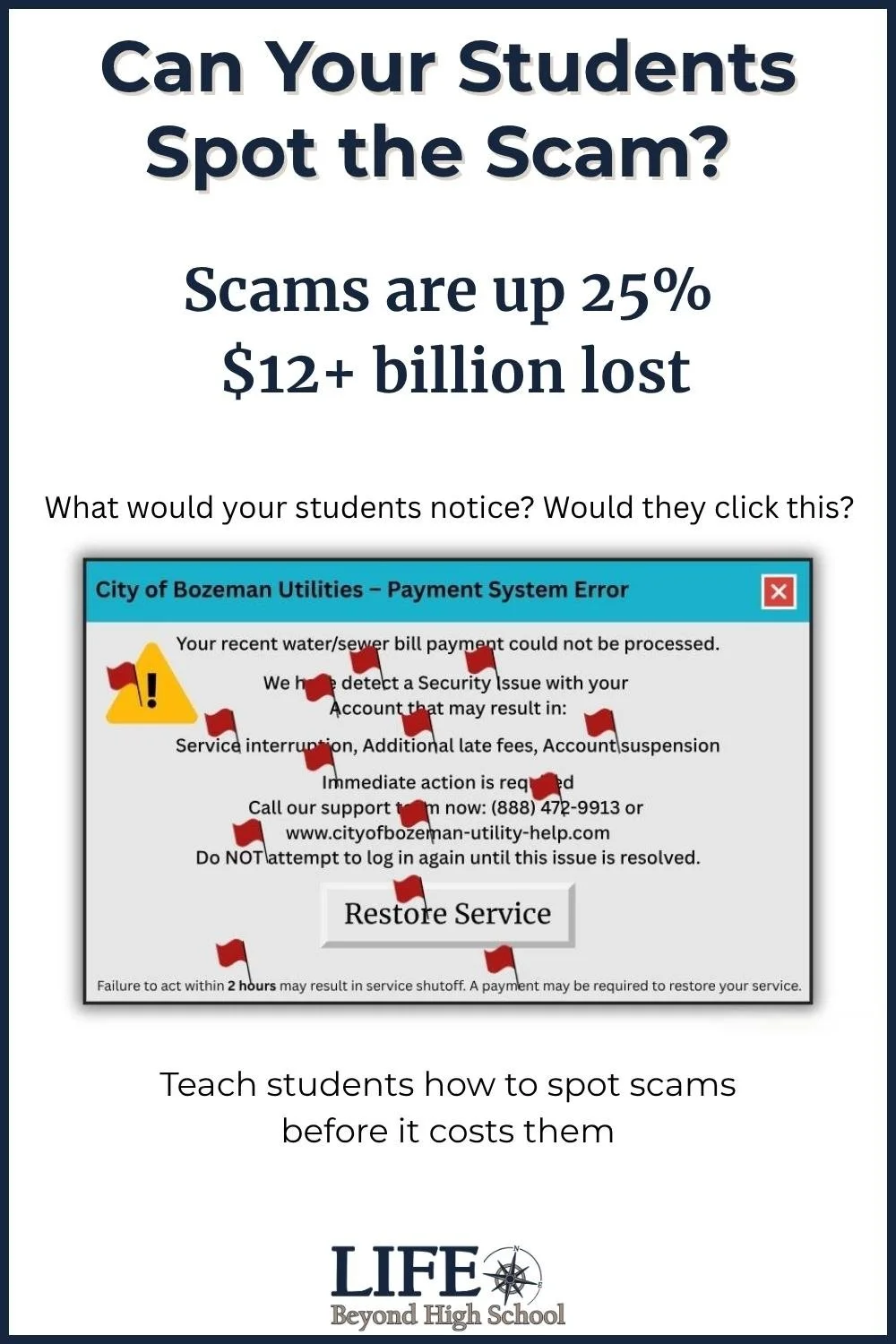
Teach Students to Spot Bill-Payment Scams
Paying a bill also means knowing when not to pay.
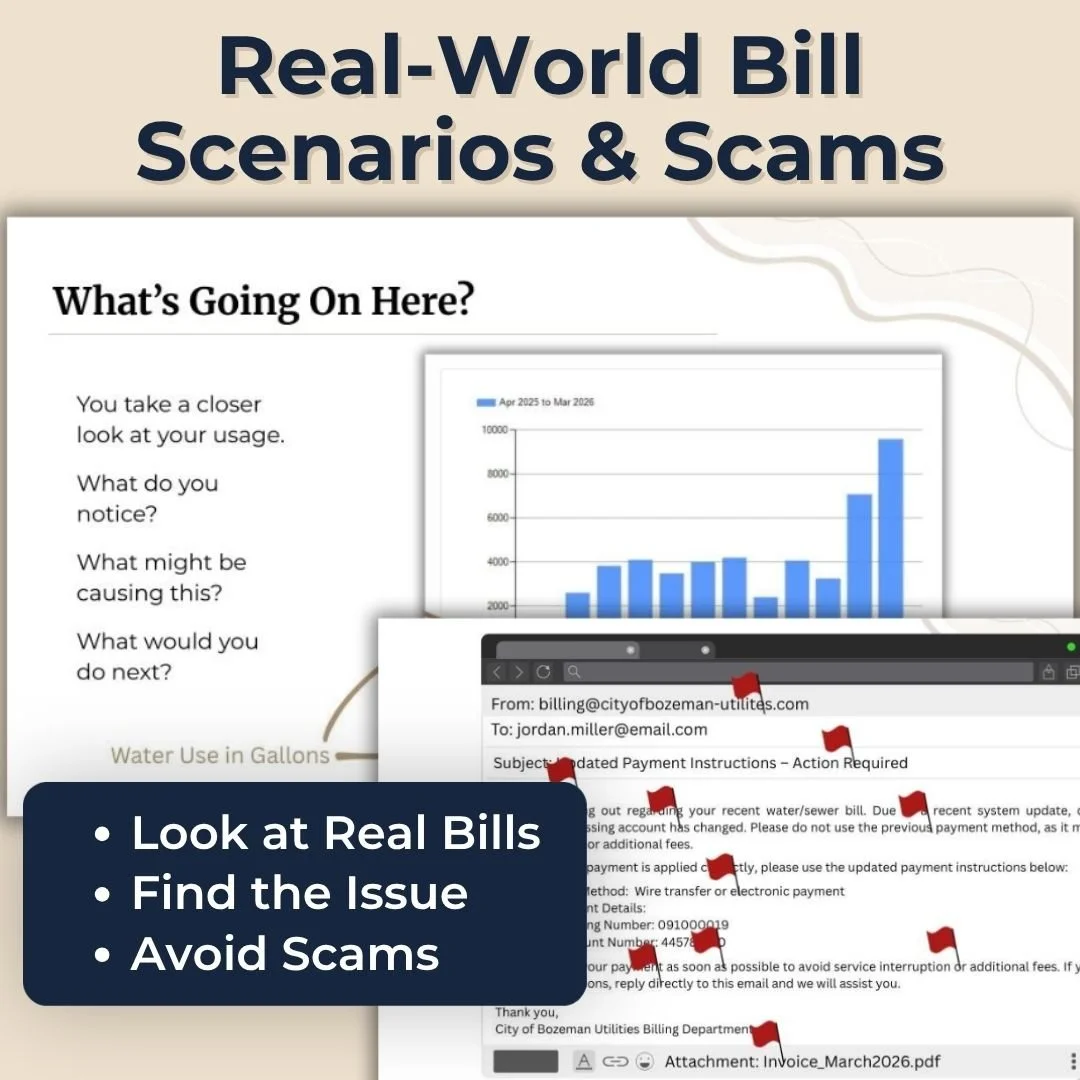
Students examine realistic scam scenarios involving emails, pop-ups, and phone calls and look for red flags such as urgency, suspicious payment requests, questionable links, and unexpected account problems.
Rather than trying to memorize every possible scam, students practice habits they can use in many situations: slow down, be skeptical, and verify before acting.
What's Included in the Paying Bills Lesson?
Everything is ready to use and designed to make a complicated adulting skill easier to teach.
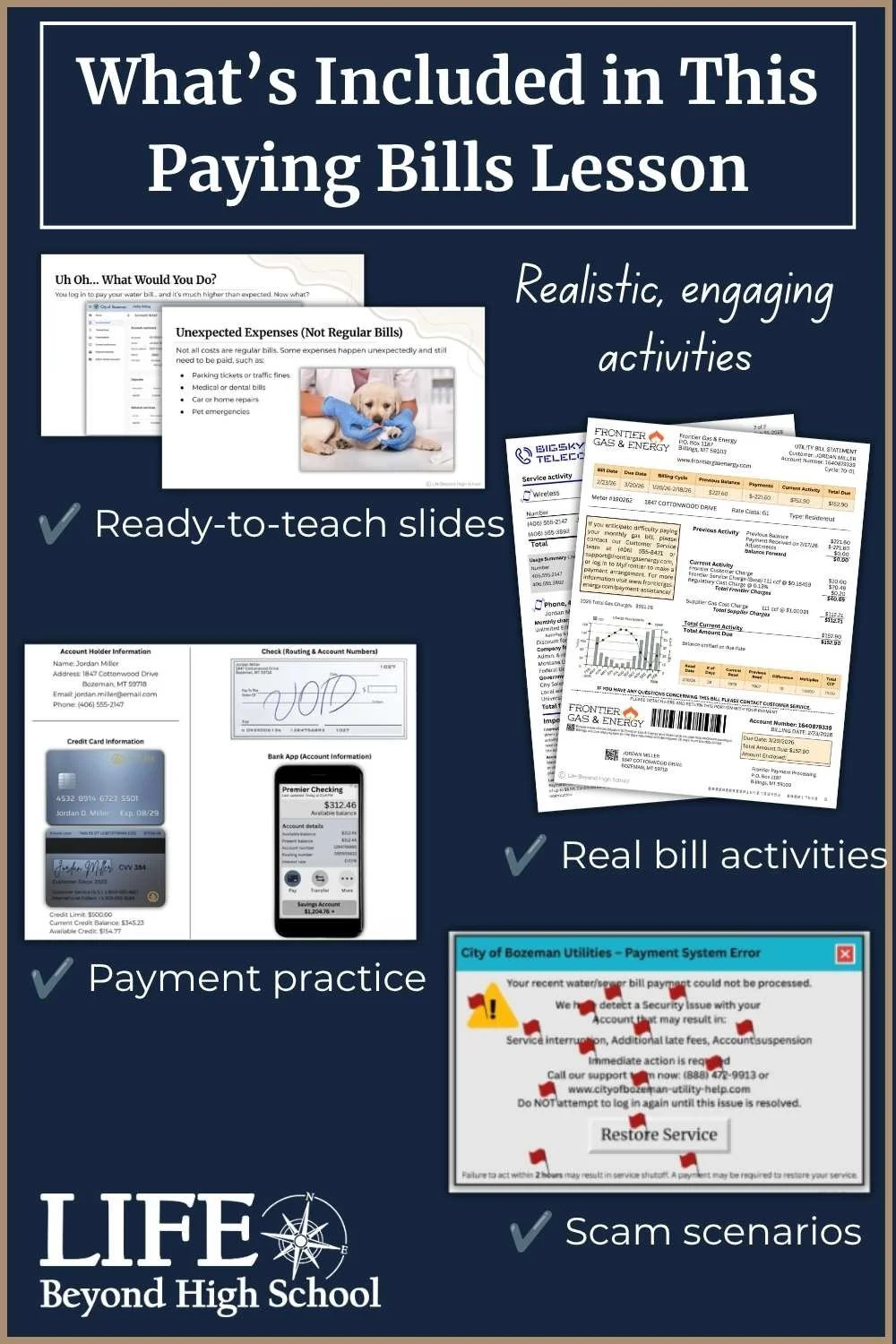
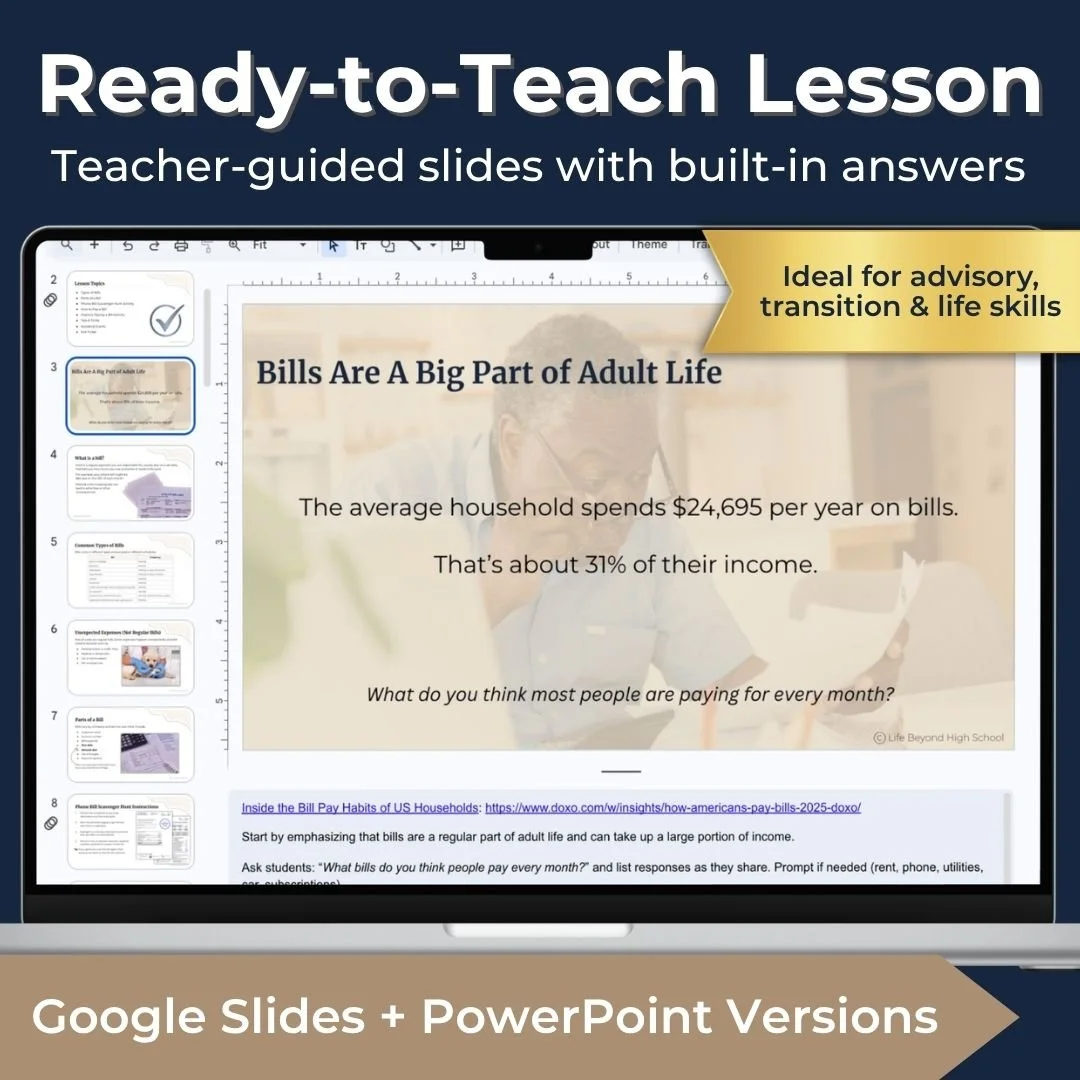
Full teacher-guided lesson presentation
Google Slides and PowerPoint versions
Speaker notes with teaching guidance and built-in answers
Phone Bill Scavenger Hunt
Utility bill payment practice
Realistic bills and financial information
Unexpected bill scenarios
Bill-payment scam activities
Answer keys and guided discussion points
Exit ticket for student reflection
Print and digital options
Made for Real High School Classrooms
The Paying Bills Lesson works well in:
Financial literacy classes
Life skills classes
Special education and transition programs
Advisory or homeroom
Career readiness and adulting units
The lesson is scaffolded and teacher-guided, making it approachable for a range of learners. Teach it in one longer block or break the activities into shorter lessons depending on your students and schedule.
Realistic Bill-Paying Activities for High School Students
Students need practice with the details of adulthood, not just the vocabulary.
That's why this resource uses realistic bills, payment information, real-world scenarios, and examples of common scams. Students find information, spot problems, ask questions, and decide what they would actually do.
You get a structured, ready-to-teach lesson. Students get meaningful practice with a skill they'll eventually need on their own.
Looking for More Ideas for Teaching Students About Bills?
If you're looking for more ideas for teaching this topic, read How to Teach Students to Understand and Pay Bills.
It explores why bill-paying can be surprisingly difficult for young adults, what students need to understand before they're on their own, and practical ways to give them real-world practice in the classroom.
More Independent Living Skills for Life After High School
Paying bills is just one part of learning to live independently.
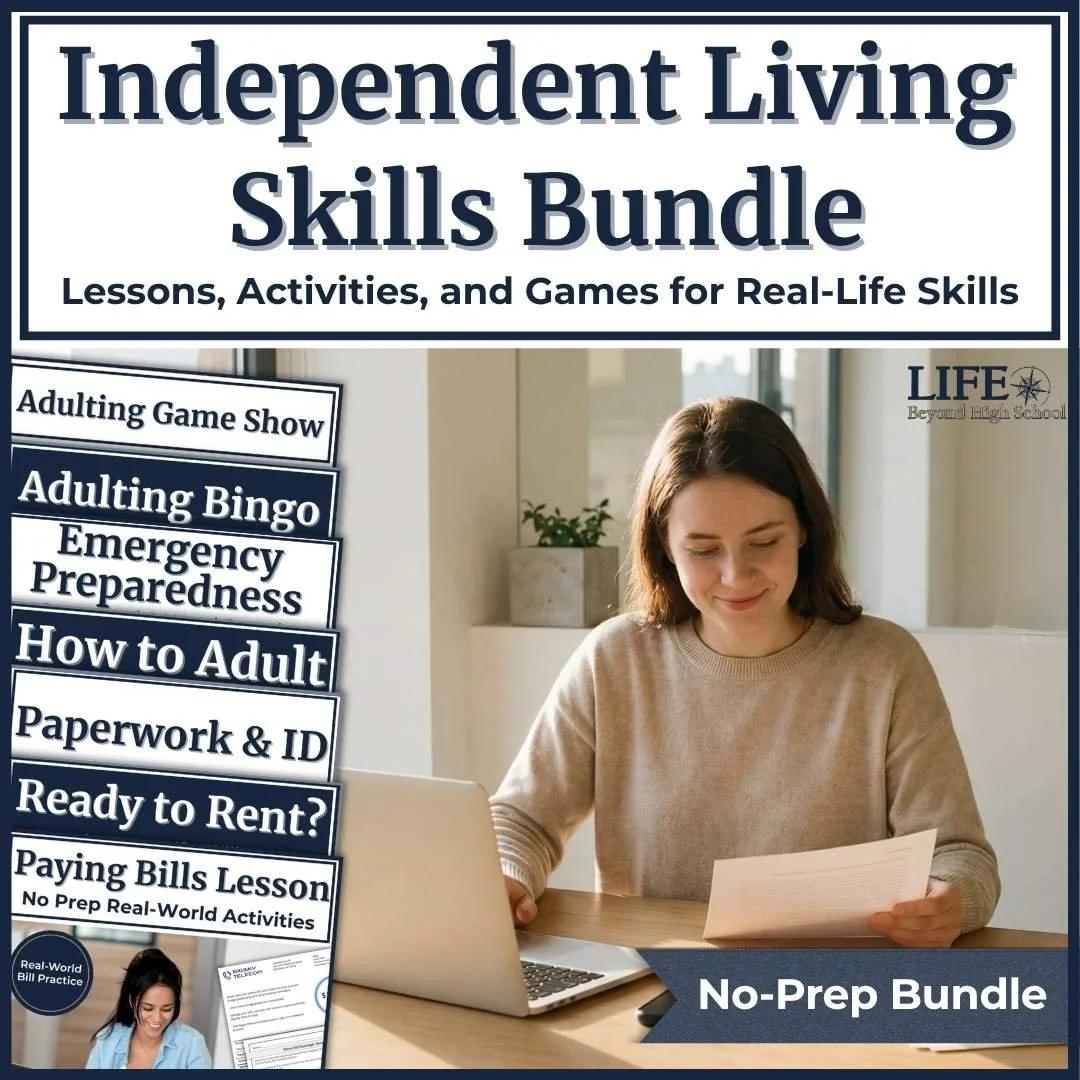
The Independent Living Skills Bundle combines this lesson with additional resources that help students practice renting, managing important paperwork and identification, emergency preparedness, and other practical adulting skills.
Ready to Teach Students How to Pay Bills?
Give students a chance to read bills, practice payments, solve problems, and recognize scams before they're navigating it all on their own.